Hysteria as Spectacle

So far in my research on hysteria many of the same points have come up. The idea of hysteria exhibiting itself through a woman as a spectacle for men is a prominent point made by Helene Cixous in The Newly Born Woman. I chose to write a script for this project because the idea of spectacle is inherent not only in hysteria, but in the DNA of film (as Cixous points out- its most pure form is in the silent era) and feminist film studies. Laura Mulvey addresses woman as spectacle in her essay Visual Pleasure and Narrative Cinema, and identifies the value of a woman’s appearance as her to be-looked-at-ness. It is also exhibited extensively in films where women are depicted as hysteric or breaking down ranging from melodramatic erotic horror films like Possession and The Brood, to the character studies of John Cassavettes’ oeuvre featuring his long time collaborator and wife Gena Rowlands – most notably in Opening Night (overt spectacle- subverted) and a Woman Under The Influence

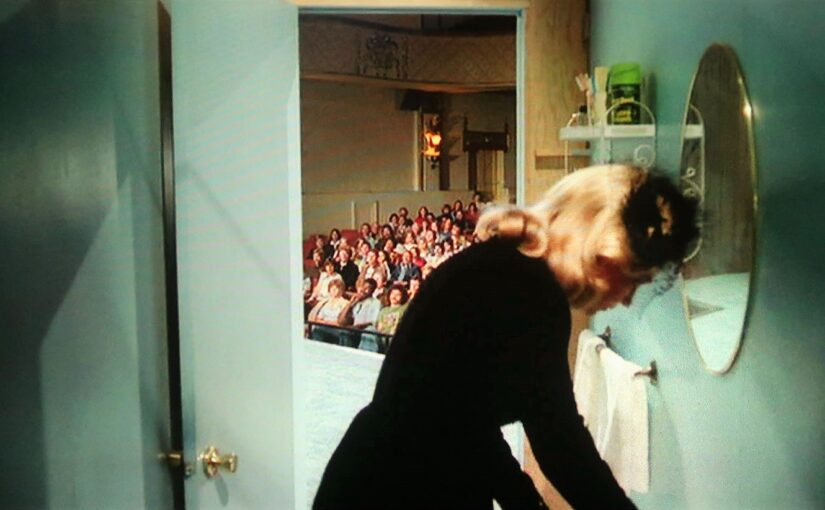
The idea of spectacle being not only exhibited, but acknowledged can be seen numerous times throughout Cassavetes’ film a Woman Under The Influence. One of the most notable examples of this can be seen in the dining room pasta scene when Gena Rowlands’ bizarre behavior serves as spectacle for her husband and his work friends – to the extent of her declaring directly to her husband that she can be anything he wants, as if putting on a show for him. She enchants. She flirts. Then she’s scolded and gawked at. She breaks down. Even the title of the film suggests a woman controlled whether it be by the ever present watch of her husband, mother, and mother-in-law, or her occasionally depicted reliance on alcohol. Even moments that should be reserved for privacy- such as her return from the psychiatric hospital, are made public. Her husband throws a unwelcome party for her and it’s not until her understandable reaction of acting irrationally and dancing on her own as the party goers, transfixed on her, are asked to leave the party- unable to the peel their eyes away as her apparent regression transpires. 

I specifically call attention to this film from my research because I think it is a true and fair portrayal of a “hysteric” woman because unlike other films the blame isn’t posited on her. She is a product of her circumstances and the time she exists in. She is the way she is because of the overbearing influence of everyone around her. She’s treated like a child and she has never been able to form an identity independent of those around her. She is always in relation to someone just as the title, a Woman Under The Influence, suggests. The interesting thing about this is that even though the film is directed by a man and technically shown through a male gaze – Gena Rowlands was given significant creative control over the portrayal of the character and you can see the honest depiction arising from both points of view. The film doesn’t depict some crazed male fantasy of a sexual object losing her mind while still remaining desirable; It depicts a husband and family that lack emotional intelligence and a woman whose foundation and identity were built on that.


Gender, Identity and Intersectionality

It’s funny how when we are born we are automatically assigned to a specific gender (boy or a girl). And the expectation that is expected once you’re told your gender is that you live up to credentials. For me I know growing up in the Caribbean they take gender identity a bit seriously because of the lack of knowledge that they have towards gender identity. Many people don’t understand why it’s important to allow someone to be who they want to be without being forced to be who they are told they are.

Research Summary

All my life I’ve always known that men got paid more than women, however, I never looked into it specifically until I chose this as my Final Project topic. In the film industry alone, among the stars, I’ve learned that there is a million-dollar wage gap among the most notoriously known actors. So take into consideration that if in one of the most lucrative industries there is such a difference, everyday jobs wage gaps are also substantial. For every dollar, a man earns in the United States women only earn 82 cents.

One of my sources also talks about this issue in sports. There are a lot of factors that also go into the gender wage gap. Those factors range from education level to years of experience and a lot more. Another problem is that there is even more of a gap when you take race into consideration, with minorities being highly affected. This issue needs to gain more traffic in today’s media because women are doing the same amount and quality of work, sometimes more than men but being paid less. Let us close the divide one step at a time. Companies can help close this gap are by starting with a pay audit and taking other steps towards pay equity.

Intersectional Analysis- Laverne Cox

Celebrity (actress)- Laverne Cox 

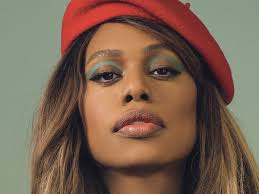
Intersectional Analysis- Laverne Cox is a American Actress and LGBTQ+ Advocate. Laverne Cox is a transgender black woman and her identity and pronouns are feminine. On her website, Cox explained, “During my college years, I went from being gender nonconforming to being more and more femme. I would soon start my medical transition and living and identifying as female. As I started my transition, I knew I wanted to continue to perform and I often found myself performing in drag shows in the nightclub scene.  I never really identified as a drag queen but it provided an outlet for my desire to perform.” Laverne was always a performer and always did short films and independent films before landing her the role in “Orange Is The New Black” that changed her life forever.  Her role of Sophia Burset in the Netflix original series “Orange is The New Black” brought her to the attention of diverse audiences all over the world. This role lead to Laverne becoming the first openly transgender actress to be nominated for a Primetime acting Emmy and made her the first Trans woman of color to have a leading role on a mainstream scripted television series. Although Laverne has experienced hate and oppression from anti-trans individuals, she is still working hard to make her presence and identity known in order to help the entirety of the LGBTQ+ community.

Post 10 – The Master’s Tools

Audre Lorde's Berlin - The New York Times

By: Shai Hutchinson

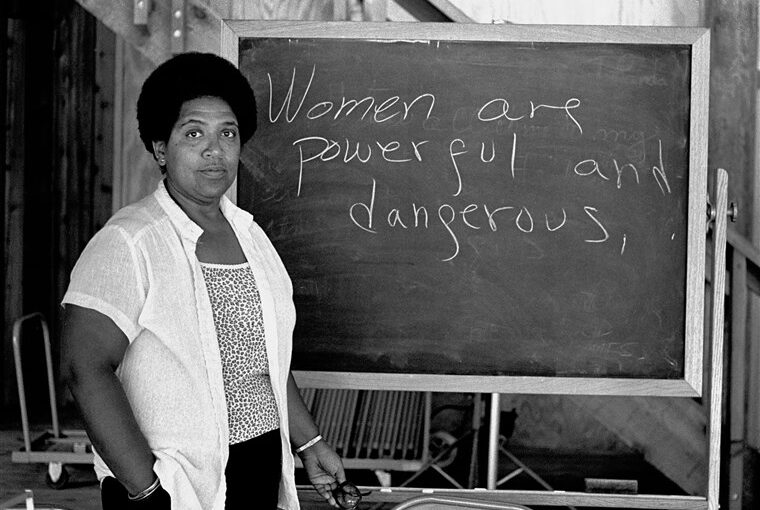
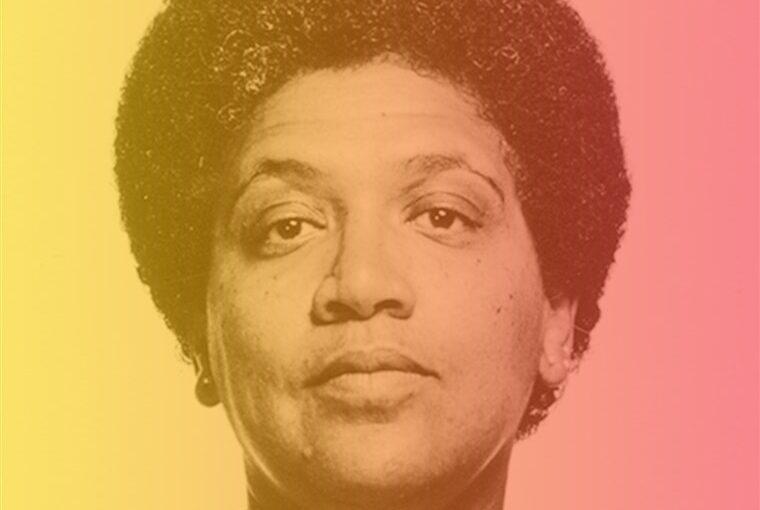
Based upon Audre Lorde’s essay, The Master’s Tools Will Never Dismantle the Master’s House, I agree with this statement, but only to a certain extent. Lorde says “tools of a racist patriarchy are used to examine the same fruits of that same patriarchy(98),” while speaking in reference to her last minute minute phone call, as a black woman, to speak on the panel. I agree with this in context of the role of differences within the lives of women, where we are truly diverse when it comes to color, sex, and sexual orientation. This freedom to express our differences is often suppressed as a result of the racist and sexist world that we live in. Many times the patriarchy themselves attempt to explore the nature of our suppression, which is essentially caused by them and their attempts to fit us into the social roles that they deem is what a normal woman should be. As stated by Lorde, “Racism, sexism and homophobia are inseparable,(99)” illustrating how these traits normally fit into the same category. Those who are racist often tend to be sexist and homophobic as well, fitting into one representation. However, I believe that despite our suppressed differences, it is indeed possible to dismantle the master’s house. We can take our differences and make them into strengths. The patriarchy thrives on preventing us from bringing about change my suppressing our creative nature by suppressing the expression of our differences, but what would happen if for example, all the black lesbian women came out and stood up for change? The more women who come out of their shells and embrace and express their differences, the better chance we will have in dismantling the racist, sexist and homophobic patriarchy that we live in. In this event, the racists, homophobic and sexists will not be enough to stop the power conveyed from our joint confidence and creativity and we will indeed be strong enough to “dismantle the master’s house.”

The Master’s Tool Will Never Dismantle the Master’s House

Audre Lorde bluntly points out that society has gotten into the habit of leaving no room for anyone to breathe or achieve a brighter future. When she urges that women should lean on one another in times of need in order to untangle the scrutiny that is behind giving women more leeway to make changes. It’s in The Master’s Tool Will Never Dismantle the Master’s House that (Audrey) states “…know that survival is not an academic skill. It is learning how to take our differences and make them strengths. For the master’s tools will never dismantle the master’s house. They may allow us to beat him at his own game, but they will never enable us to bring about genuine change. And this fact is only threatening to those women who still define the master’s house as their only source of support.” (2) Women continue to hit a roadblock when their plans to release some of the pressure that comes from the judgment of wanting to do things differently is swept under the rug. That the weight of past expectations is carried into the present and prevents people from making any real changes. Another example, (Lorde) states that “Advocating the mere tolerance of difference between women is the grossest reformism…Difference must be not merely tolerated, but seen as a fund of necessary polarities between which our creativity can spark like a dialectic. Only then does the necessity for interdependency become unthreatening.” (1) Women are constantly at odds with themselves on what the best course of action is to take in order to one day resolve the issues they are facing with the significant equality differences between men and women. In the event that they do go into action it never appears to be enough to make those necessary adjustments towards society who lacks a better understanding of what their people need. 

The Master’s Tools

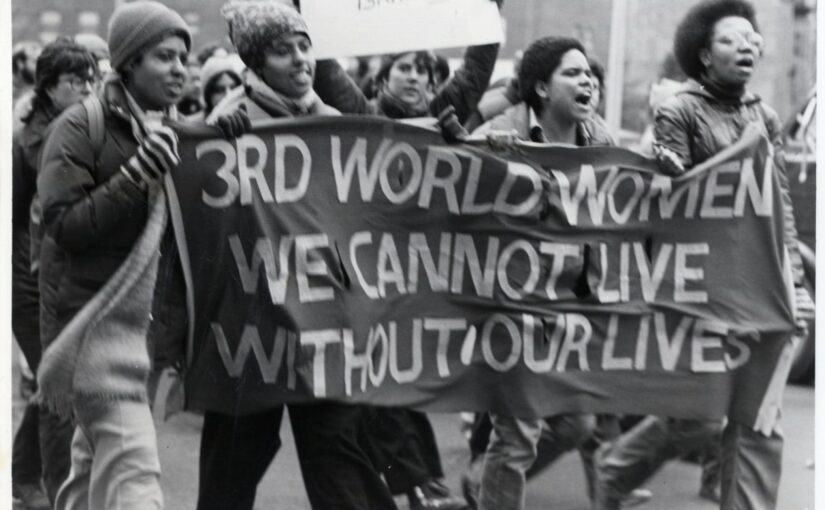
The Master’s Tools Will Never Dismantle the Master’s House an essay by Audre Lorde a black and lesbian feminist. Lorde makes the statement that feminist movements of the past revolved around white education and often do not consider minorities. She also shares her views that gender and race should not be separated. I agree with her statements since it is shown that throughout history white men are the ones in power followed by white women. Feminist movements follow the same concept. They excluded other minorities such as race, ethnicity, and sexuality. It seems like it is an endless cycle that there has to be group of people who are dominant. I agree that we as a society have to understand that racism, sexism, and homophobia go hand in hand and it is in our best interest to not tolerate it. It is also better to fight together than separately for certain causes.

Post 10: The Master’s Tools

I agree with Audre Lorde’s points made in the essay. If white women actually cared to find other black feminists to speak for the conference then, they would have found other speakers. The “we did not know who to ask” was not an excuse. This was a way for them to be blame free. They didn’t want to look racist or homophobic. They wanted to appear “inclusive”. The white feminists only sought to better the lives of middle class white women. If these women were able to become educated in white feminist theory then, they could have become informed about black feminism, and lesbian issues. They clearly did not care and were self-serving. The conference was excluding women of color and lesbian women from contributing anything. The intention of the conference was to appear as though they were dismantling patriarchy, when in reality they were upholding it. If women of color and lesbian women are left out of the conversation then, the conversation still serves the “Master’s House”.

Lorde mentioned if women all sought to examine their differences then, they would be able to utilize those strengths. The problem with patriarchy is that it does not want women to realize the power they have. The patriarchy teaches women to be weary of differences because it causes “separation and suspicion”. In discovering the differences between women, they could begin to create out of those differences. Once women have a common cause, they can utilize their power as a community to fight against the patriarchy. This community only desires “a world where all can flourish”.

Post 11: Research Summary

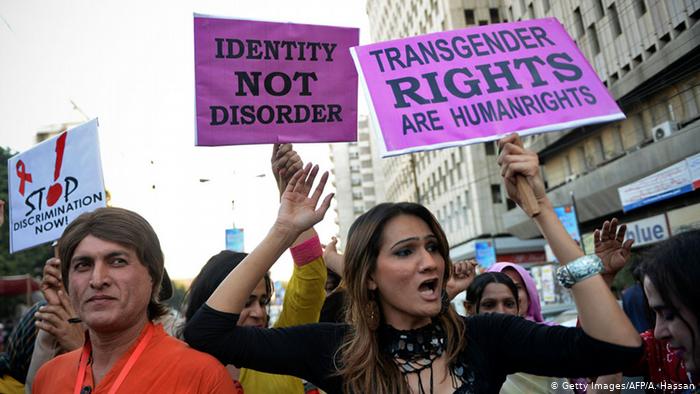
It is impossible to understand the struggles experienced by transgender people without knowing what gender dysphoria is. The term can be “broadly defined as discomfort or distress that is caused by a discrepancy between a person’s gender identity and that person’s sex assigned at birth (and the associated gender role and/or primary and secondary sex characteristics)” (“Life satisfaction and mental health among transgender students” 1). Studies show that in addition to this discomfort transgender people go through serious psychological distress. Discrimination, negative attitudes among the public, and stigma of gender minorities significantly affect the mental health of transgender people. According to the 2015 US Transgender Survey, forty percent (40%) of respondents have attempted suicide in their lifetime, nearly nine times the rate in the U.S. population (4.6%). Additionally, thirty-nine percent (39%) experienced serious psychological distress in the month before completing the survey, compared with only 5% of the U.S. population. This disturbing data indicates that transgender people experience not only bodily discomfort but also severe psychological distress caused by discrimination, stigma, and negative attitudes among the public. Analyzing transgender individuals’ mental health issues shows the ways in which society needs to work in order to establish a more inclusive environment.

Post 10: The Master’s Tools

Audre Lorde says in her essay of the same name: “For the master’s tools will never dismantle the master’s house” (99). I agree with that statement after reading the essay and the book This Bridge Called My Back. I cannot explain the reason for my agreement better than Audrey Lord did herself: “Women of today are still being called upon to stretch across the gap of male ignorance, and to educate men as to our existence and our needs. […] Now we hear that it is the task of black and third world women to educate white women, in the face of tremendous resistance, as to our existence, our differences, our relative roles in our joint survival” (100). The master’s tool is ignorance, and if feminists use it to fight for their rights, they will never succeed because sexism cannot be eliminated alone, without racism and classism. I do not think that Lord’s statement needs to be modified for it reflects the issue perfectly. White heterosexual women overlook and disregard the problems concerning women of color, poor women, and women of the LGBTQ+ community the same way as men fail to acknowledge the issues that women face. It is impossible to advocate for women’s rights and ignore some women, forgetting that they are affected too. It is impossible to reach equity and equality without including everyone in the discourse.