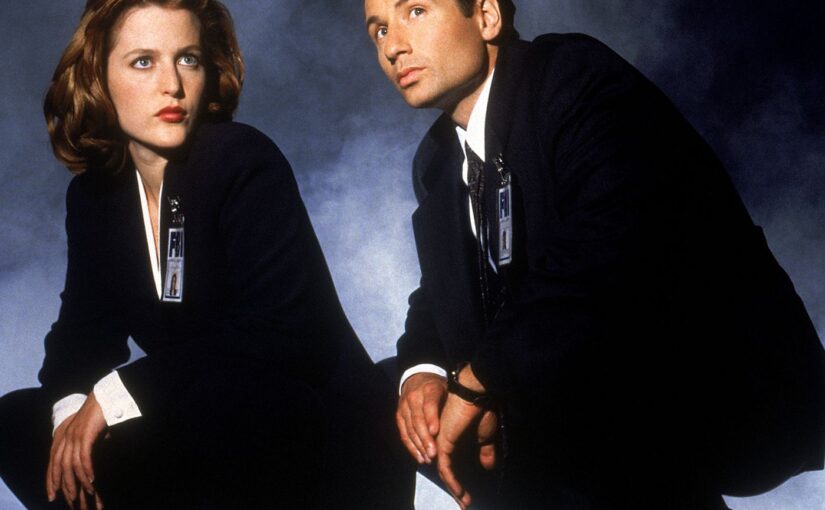
It’s hard to know really how many aspects of your identity you get to choose when you’re raised by people who are making decisions for you through your formative years. The movies you watch, the music that plays around you, your personality in response to your setting. Obviously as you grow older you get to choose more and more things for yourself, but now with social media and the constant image based content of sales being shoved in your face it almost makes identity even more confusing. I think the biggest factor in identity is capitalism because we are essentially being grouped into demographics (Gender being the first way to divide us into two groups upon birth) in order to be marketed to and this shapes our identity whether we actively notice it or not. Obviously the ones who are most benefitting from capitalism are white men, so white men have a lot of say as to what our identities are, which is obviously completely screwed up because that means when you start to form your own identity you have to rid yourself of all these preconceived notions of what your former self was or should be. It’s like starting out with a form of debt. …(I used the picture of Scully and Mulder because the stereotypical gender traits were swapped – Scully the skeptic and scientist – Mulder the believer).
Author: ALIXANDRIA BERG
Master’s Tools Response
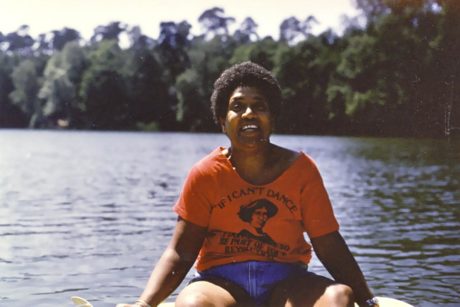
I kind of agree with this statement because I am both a pessimist and a purest. So when I think of dismantling a system I think of abolishing it, not reforming it. I think that the ideal would be to completely wipe something out and start over because if you have any bit of the original version left, I think it will return to its original form. And if you try to dismantle it with its own ways it can figure out your next move. I agree with the statement, but if your role is being an activist and trying to get people to join you, most people just aren’t that radical, and if you are trying to take something established down you need numbers. There was a line that Corey Booker said during a democratic debate a few years back “We cannot sacrifice progress on the altar of purity,” and as much as I HATE to agree with him because this line was used against my favorite progressive candidates (Bernie and Warren) about universal health care… He did have a point. At that time republicans were the majority in the Senate and held the office of president, and this was pre-pandemic, so things were different, and there wasn’t much of a chance. I do however think that there would be more of a chance had those primaries happened after the first part of lockdown, but still I’m not hopeful because our way of voting by electoral college is so conservative and racist that unless we abolish that too we won’t get what we want.
Anyways my point is I like the way Audre thinks in theory and I do agree with her, but I don’t think that much progress will be made if it’s an all or nothing ideal and to be able to even suggest that, is a privileged stance (and by privilege here I mean she is an artist and writer- she was able to transcend her role in the universal world in order to become her authentic self, and in doing so she can make these statements that other women of color who maintain regular jobs and normal lives would not be able to make and stand by without repercussion). Audre’s way of thinking is great on an individual level as an artist, but I just dont think it will work itself out to be the universal. Also all of these systems were built on the back of other systems that we would need to abolish. Like above when I mentioned healthcare and the electoral college, you’d need to get into a near infinite regress in order to properly dismantle the system and the systems they were built on. Otherwise everything “fixed” within these systems will just be topical. That is why though I like what she says and agree with the statement I just don’t see it as ever working out. Personally I just don’t think much change will ever be made in regards to anything progressive whether it’s her all or nothing approach or Booker’s small steps approach. Excuse my language but I think we’re all fucked and will continue to get more fucked.
Hysteria as Spectacle Presentation
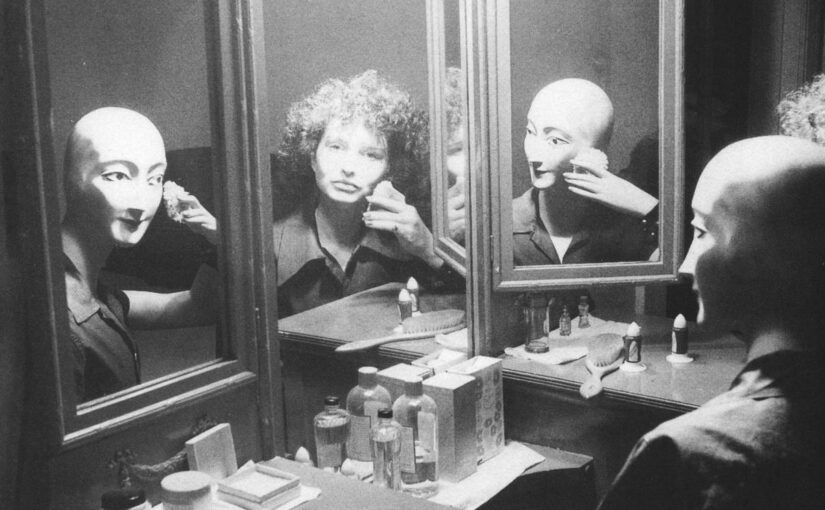
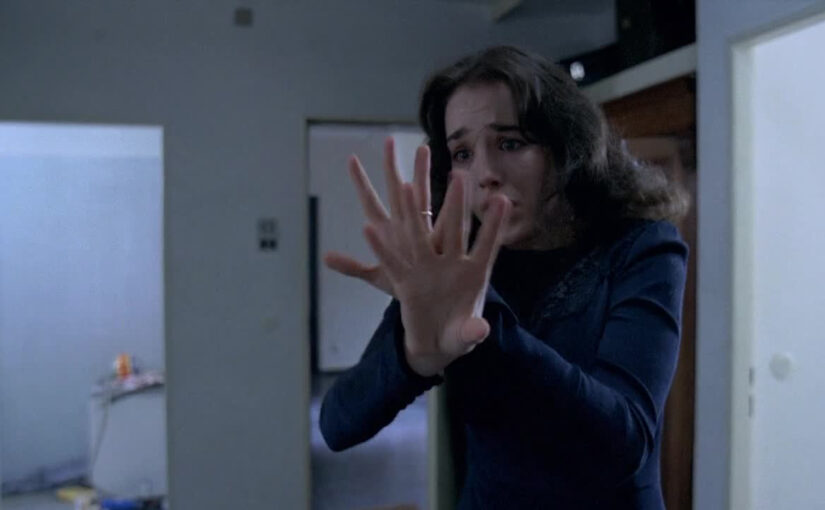
In my presentation I have laid out examples of representations of hysteria in film ranging from Andrzej Zulawski’s Possession to John Cassavete’s Love Streams and Chantal Akerman’s Jeanne Dielman. This includes film clips, screenshots, and research from Helene Cixous and Laura Mulvey. I include examples of heavily male gaze tinted films, male directed films without objectification, and female directed films. I talk about hysteria as spectacle (Cixous) and woman as spectacle (Mulvey). These are the things I have considered while writing my script.
Final Project – Hysteria Script
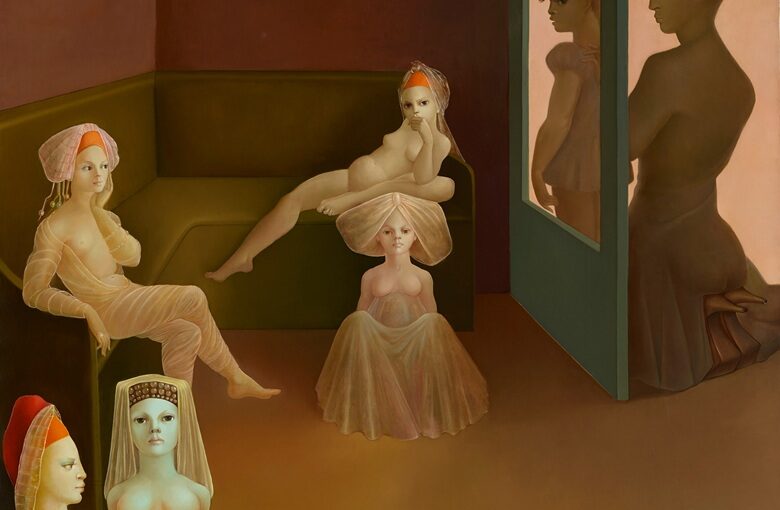
The idea of hysteria manifesting itself through a woman as a spectacle for men is a prominent point made by Hélène Cixous and Catherine Clément in The Newly Born Woman. I wanted to write a script for this project because the idea of spectacle made for and by the male gaze is inherent not only in hysteria, but in the DNA of film and feminist film studies. Laura Mulvey addresses the woman as spectacle in her essay “Visual Pleasure and Narrative Cinema”, and identifies the value of a woman’s appearance as her to-be-looked-at-ness. The emphasis on a woman’s appearance in relation to her overall value is the omnipresent oppressor in our patriarchal society, one in which the hetero eurocentretic capitalistic male gaze is the definer of criteria. The purpose of a woman is essentially to be desirable enough to be a viable commodity and if they’re not they have no business being seen. “With the circus and the cinema, we have moved into the institutionalization of hysteria: spectacle cashing in on the exchange of money” (Cixous p.13). This statement perfectly illustrates the environmental conditions of patriarchy, capitalism, and institutions that are needed in order to serve as a stage and catalyst for hysteria to manifest because hysteria does not surface without the presence of bondage or spectatorship.
In most of the films (Possession by Zulawski, The Brood by Cronenberg, Repulsion by Polanski) that I watched by male directors that depicted hysteria – the woman almost always serves as a manic spectacle while still maintaining a level of attractiveness for the male spectator or else there would be no reason for the male to watch or endure the emotional distress present in the situation. What usually sparks the episode of hysteria is infidelity (or any sexual act-or lack thereof) or some form of transgression against prescribed gender roles. The woman simply exists and only becomes the hysteric once the man steps in and identifies a “problem” which is usually some unexplainable force (such as an undiagnosed mental illness or paranormal entity) that controls her and causes her to undermine him as her superior and owner. In doing this, the agency is taken from the woman, but the blame is still posited on her instead of on the society in which she resides. We only see what she has done and not what she has endured.
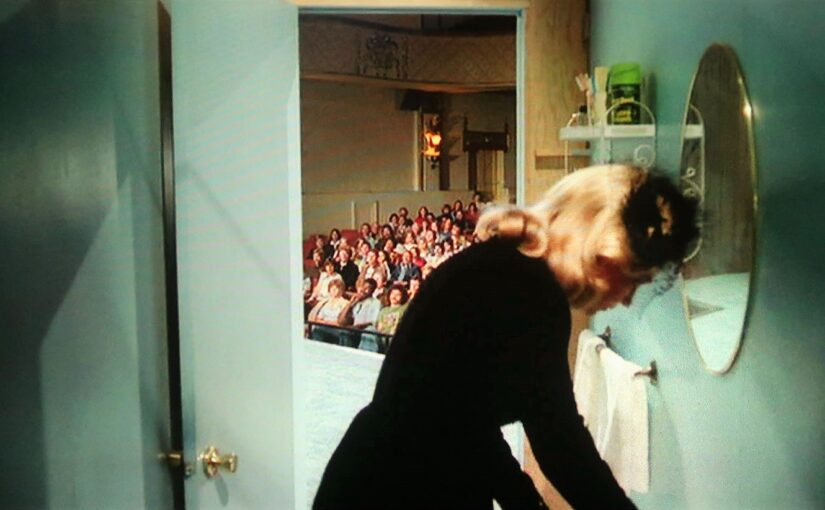
This of course isn’t always the case as there have been emotionally intelligent depictions of hysteria and mental illness portrayed by men… or rather one man – John Cassavetes with the collaboration of his wife Gena Rowlands. His female characters exhibiting signs of hysteria are usually cracking under the pressure of gender roles and expectations. The female characters even when experiencing near psychosis are desperately attempting to regain themselves. We can always see them thinking. They have objective and purpose. Everything is done as if their lives depend on it. Another thing he does is he flips the camera towards the spectator while the spectacle is happening. In A Woman Under The Influence he focuses on the reactions of the partygoers exiting the party who watch Gena Rowlands bizarrely dance on the couch after her return from treatment. In Love Streams, Gena Rowlands’ character desperately attempts to make her daughter and ex husband laugh to no avail. Instead of us watching her we watch the ex husband and daughter as she slips in and out of frame. Cassavetes also doesn’t leave hysteria just for women. The male characters in his films can often be seen as hysteric and his character in Elaine May’s Mikey and Nicky is a true hysteric.
I chose to write a silent film because I didn’t want to explain what was happening to the protagonist, but rather have the viewer experience what she experiences and feels. Cixous and Clément emphasize fragmented memories and relation to youth. In my film the protagonist is caught in an obsessive recounting of memories and images from her youth intertwined with nightmares of her current situation and future. The emphasis here is still placed on appearance and aging because unfortunately those are the ever present criteria in which we are being appraised. It’s not that the psychosomatic symptoms of hysteria presented in film are always wrong, but it’s the fact that the cause is often absent and we are watching the “hysteric” through a male’s eyes. It’s about his perception and not hers. My script on the other hand is about her perception.
Hysteria as Spectacle
So far in my research on hysteria many of the same points have come up. The idea of hysteria exhibiting itself through a woman as a spectacle for men is a prominent point made by Helene Cixous in The Newly Born Woman. I chose to write a script for this project because the idea of spectacle is inherent not only in hysteria, but in the DNA of film (as Cixous points out- its most pure form is in the silent era) and feminist film studies. Laura Mulvey addresses woman as spectacle in her essay Visual Pleasure and Narrative Cinema, and identifies the value of a woman’s appearance as her to be-looked-at-ness. It is also exhibited extensively in films where women are depicted as hysteric or breaking down ranging from melodramatic erotic horror films like Possession and The Brood, to the character studies of John Cassavettes’ oeuvre featuring his long time collaborator and wife Gena Rowlands – most notably in Opening Night (overt spectacle- subverted) and a Woman Under The Influence.
The idea of spectacle being not only exhibited, but acknowledged can be seen numerous times throughout Cassavetes’ film a Woman Under The Influence. One of the most notable examples of this can be seen in the dining room pasta scene when Gena Rowlands’ bizarre behavior serves as spectacle for her husband and his work friends – to the extent of her declaring directly to her husband that she can be anything he wants, as if putting on a show for him. She enchants. She flirts. Then she’s scolded and gawked at. She breaks down. Even the title of the film suggests a woman controlled whether it be by the ever present watch of her husband, mother, and mother-in-law, or her occasionally depicted reliance on alcohol. Even moments that should be reserved for privacy- such as her return from the psychiatric hospital, are made public. Her husband throws a unwelcome party for her and it’s not until her understandable reaction of acting irrationally and dancing on her own as the party goers, transfixed on her, are asked to leave the party- unable to the peel their eyes away as her apparent regression transpires.
I specifically call attention to this film from my research because I think it is a true and fair portrayal of a “hysteric” woman because unlike other films the blame isn’t posited on her. She is a product of her circumstances and the time she exists in. She is the way she is because of the overbearing influence of everyone around her. She’s treated like a child and she has never been able to form an identity independent of those around her. She is always in relation to someone just as the title, a Woman Under The Influence, suggests. The interesting thing about this is that even though the film is directed by a man and technically shown through a male gaze – Gena Rowlands was given significant creative control over the portrayal of the character and you can see the honest depiction arising from both points of view. The film doesn’t depict some crazed male fantasy of a sexual object losing her mind while still remaining desirable; It depicts a husband and family that lack emotional intelligence and a woman whose foundation and identity were built on that.
Post 9
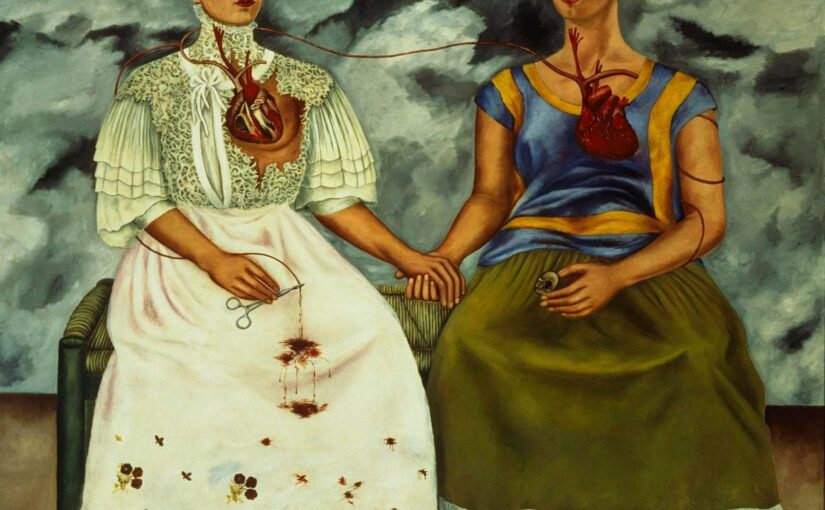
I chose to pull a quote from page 68 to 69 of I Don’t Understand Those Who Have Turned Away From Me by Chrystos. “All the schools & crazy houses I was in were simply brainwashing & most of the feminist movement that I worked so hard to be a part of was propaganda. This is heresy but it held no solution for me. Surely Jane suffers oppression on her job because she is a woman. All the problems and issues which feminism raises are valid & important. It simply does not give me any answers for correct behavior in my own life. Certainly I won’t obey that lesbian mafia nonsense that one must dress in a certain way or cut off one’s hair to be real. Those are all the most superficial rules silly I no longer believe that feminism is a tool which can eliminate racism – or even promote better understanding between different races & kinds of women I have felt less under- standing between different races & from many lesbian women than I do from some straight people. At least their heterosexual indifference allows me more freedom to be myself I felt so much stricture & censorship from lesbians I was supposed to be a carpenter to prove I was a real dyke….The lies, pretensions, the snobbery & cliquishness The racism which bled through every moment at every level The terrifying & useless struggle to be accepted The awful gossip, bitchiness, backbiting &jealousy The gross lack of love. I left the women’s movement utterly drained. I have no interest in returning.” This essay relates to the other works in this anthology in more ways than one. It talks about those in your immediate circle prescribing identity – like in the essay I Am What I Am by Rosario Morales. It touches on race like every work within this book. Chrystos talks about the white woman’s lack of true alliship, like in the poem And When You Leave Take Your Pictures With You by Jo Carrillo.
I chose this quote because I think it perfectly illustrates the expectations and impositions of identity that are often ascribed by those who supposedly fight to gain the right for individuals to define themselves. I am a feminist, but I often find that most impositions related to defining one’s self comes from the women around me who also call themselves feminists. Maybe in reality this statement isn’t true, and the men around me do it more, but it stings more from someone you expect to be an ally to other women. I don’t often get other women or even men telling me how I personally should be because I have a very dominant demeanor and I don’t take shit from anyone, but I am always hearing from my friends who identify as women, how they think other women should act especially in relation to men or in their outward appearance. There are so many rules – you always have to support other women, you always have to be independent, you can’t dress a certain way or have certain interests. It’s exhausting and disheartening. It reminds me of what Gloria Steinem said about women who supported Bernie over Hillary in the 2016 election. She said “There’s a special place in hell for women who don’t help other women.” This comment to me is ridiculous because women should be able to support whoever they want to and do whatever they want without the expectation of choosing someone just because they are a woman. In asserting what a woman ought to do – she is effectively stripping away the woman’s right to choose. You can’t base a movement of empowerment and self identity around dogmatic criteria.
Bibliography – Hysteria Script
- Averett, Kate. “The Politics of Hysteria in David Cronenberg’s” The Brood”.” (2017).
I found this source on google scholar. I’m using it because there is an entire chapter on the representation of female hysteria in Cronenberg’s The Brood and it’s written from a woman’s perspective. Since I plan on writing a silent film, I think the psychosomatic form of hysteria in this film may be particularly useful.
I found this source on I-D’s website, which is a magazine that deals in culture, art, fashion, politics, etc. The article is on topic for what I’m doing since it examines female hysteria in film.
- Mulvey, Laura. “Visual pleasure and narrative cinema.” Visual and other pleasures. Palgrave Macmillan, London, 1989. 14-26
I’m using this seminal text because Mulvey dissects the male gaze and diagnoses the role of women in film as they are presented through said gaze – or as she refers to it as their to-be-looked-at-ness.
- Devereux, Cecily. “Hysteria, feminism, and gender revisited: The case of the second wave.” ESC: English Studies in Canada 40.1 (2014): 19-45.
I found this on google scholar. I have only skimmed this, but it seems to be talking about my subject exactly, so I feel it will be useful.
- Zulawski, Andrzej. Possession. Limelight International, 1981.
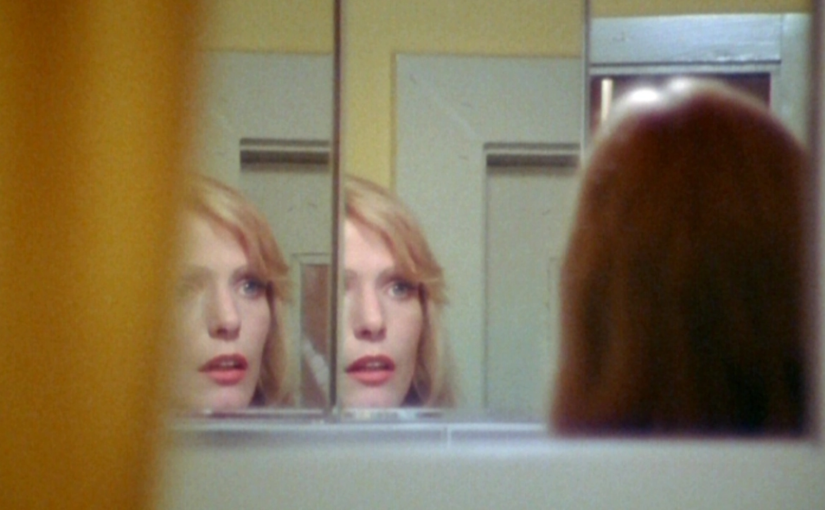
I’m using this film as one of the main sources because it shows a couple experiencing hysteria in the most exaggerated and physical way. This film is a good one to examine because the director, Andrzej Zulawski, is the filmmaker who is most associated with the term hysteria (which he absolutely hates). When hysteria is talked about in relation to this film, it is often talked about not only through the actors’ portrayal of it, but through the film language itself.
- Elaine , May, director. Mikey and Nicky. Criterion Collection, 1976.
This film shows male hysteria and paranoia through a woman director’s lens, and it shows it so well.
- John Cassavetes’ A Woman Under The Influence, 1974, and Opening Night, 1977.
These two films show a woman (played by Gena Rowlands in both) in the throes of a nervous breakdown in the most realistic way. Though each of these films were directed by a man, John Cassavetes, he gave his actors a lot of freedom in order to get realistic portrayals and true emotions. Gena Rowlands was his wife and collaborator up until his death in 1989, so even though it was directed by him, she was the one who really chose how to depict a woman’s “hysteria”.
- Rainer Werner Fassbinder’s films Fear of Fear (1975), In a Year of Thirteen Moons (1978), Bitter Tears of Petra Von Kant (1972), and Martha (1974), as well as the corresponding chapters in the interview books Anarchy of The Imagination and Chaos as Usual.
His films often deal with themes of gender identity, hysteria, sexual orientation, and masochism. Fassbinder’s style is melodrama, so his films are often over the top and his characters tend to be going through a breakdown and are either severely sadistic or masochistic (see Martha and Bitter Tears…), but somehow he manages to still show honest emotions. Fear of Fear is the perfect companion piece to Cassavete’s A Woman Under The Influence and Chantal Akerman’s Jeanne Dielman , 23 Commerce Quay, 1080 Brussels because it depicts the mental disintegration of a housewife and mother. In his 1978 film In a Year of Thirteen Moons he shows a trans woman in the days leading up to her suicide. This film is particularly controversial because it depicts that the protagonist only transitioned from man to woman because a man they loved said he could only love them if they were female. This trivializes the trans experience and makes it seem as if it is nothing more than something decided on a whim or in reaction to something temporary. The film does however show a sympathetic character (which I attribute to the actor who played Elvira), and shows not only how monumental things impact a person, but how the small things really take a toll. It also shows the consequences of the straight male gaze. Another reason for choosing Fassbender is to examine hysteria through the gaze of a gay man, since the rest of the directors were hetero men and a woman.
9. I will be using Maya Deren’s films, as well as her writings. I still have to unpack boxes from my move to see which books I have of hers…when I do, I will update this portion of my bibliography because it will probably be the biggest influence on my final script.
10. Jeanne Dielman, 23 Commerce Quay, 1080 Brussels. Directed by Chantal Akerman. Janus Films (The Criterion Collection), 1975. Criterion Channel.
This film shows a nervous breakdown from a woman’s perspective, and does so through nuanced variations in a woman’s daily routine leading to an irreversible climatic moment when she finally externalizes the rage that has been slowing building inside of her.
11. The Newly Born Woman by Helene Cixous and Catherine Clement
This book is an inquiry into the structures that uphold a woman’s place in society. They talk extensively about hysteria. The idea of hysteria as spectacle is of particular interest to me since I am writing a script and film is spectacle. This is a legitimate source because it’s a work relevant to my subject by feminist philosophers.
Silent Script
I’m going write a short silent script about “hysteria,” since that is such a gendered and derogatory term. I’m going to make it without dialogue because I don’t want to be explaining the concept; I want to show it. I need to watch films that deal with hysteria from a male perspective and see how I can work in contrast to that. I will also be watching silent shorts – probably a lot from Maya Deren – in order to structure mine. I’ll also be reading up on hysteria from a female theorist’s perspective.
What I need to find out is my take on hysteria. Is it just the term that is problematic or is it the male portrayal of women who are breaking down? I also need to read up on the origins of the term, as well as the process of diagnosis and why it became a label for women. I also have to dissect my own bias towards male director’s portrayal of a woman/femme identifying individual having a breakdown because so many of my favorite films are about breakdowns, but they’re mostly from male directors. Can a male accurately depict a woman’s breakdown without boxing her into the role of the “crazy female” whose issues are often trivialized? Should the term hysteria be reclaimed by woman identifying individuals? The academic subjects this relates to are psychology, gender studies (mostly gender identity and sexuality), and film.
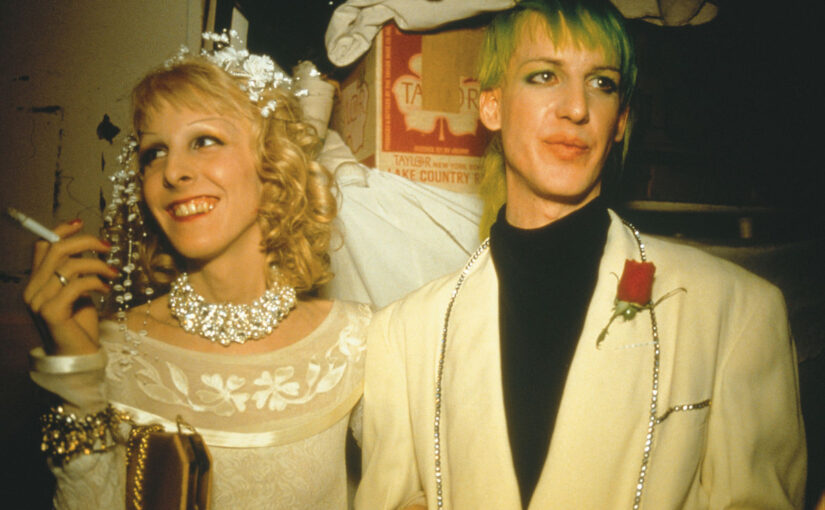
What is Gender?
Traditionally gender has been the societal way of categorizing sexes into two categories – either man or woman. We see these gendered categories pretty much everywhere from clothing lines, skin care products, characters in film/tv, and in perhaps the most debated category – bathrooms. Generally society has created these two categories as a way to box people into stereotypical roles that make it easier to market to them and to assign attributes that make the individual distinctly one or the other. It’s a way of controlling and maintaining a dated construct because anything fluid or uncategorized creates unpredictability, and for a society that is built on various forms of forecasting and marketing, it would make it significantly more difficult to sell to individuals who don’t fall into one of two categories.
Take for example when you watch a show like House Hunters. Almost every straight cis couple talks in complete sterotypes – the wife always loves to shop and the huband jokes about the closet size, and on the opposite side of the spectrum the husband needs a space for his man cave because he loves sport and beer and how could a woman possibly desecrate that scared ground of masculinity. Of course another area we see this in is the use of pink and blue to signal that an item is either “feminine” or “masculine”. Often with the pink item that’s exactly the same as the blue item, costing more.
Gender is its own hierarchy- with men on top, women below, and everyone who doesn’t identify as either one, being seen as even further below that. Men who were born with male genitalia and identify as men, are in a position of the highest privilege because they get paid more, work in higher positions, have their medical concerns taken seriously, and in cases where they are predatory the shame is thrown at the victim. Women and non binary people are often paid less, and are taken less seriously in the medical community- with pain not being taken seriously or with hysteria so tightly linked to a psychological problem. The obvious reason for this specific male dominated hierarchy is because we currently live in a patriarchal society and as a result the systems in place upholds and supports men who have power. I don’t know how one could decide just how many genders there are, but there are definitely more than two.

How To Write a Post
- Go to the class site.
- Create an account.
- Log into account.
- Click on our class time (Tuesdays 5:05)
- Click on assignments.
- Select the post.
- Read the instructions.
- Click the “+” at the top of the page.
- Type it up.
- Add a picture.
- Publish.

