I agree with the statement, “The Master’s Tools Will Never Dismantle the Master’s House.” The author speaks about the alienation of black women from the “master’s house,” These masters are the men of the world. Men who have all the power in society, in the workplace, and yes, even in the home. The master’s tools are the privileges that are given without having been working for them. These privileges are not guaranteed to everybody, only white men and other privileges to white women. If white women who possess those privileges are not aware of their own ability to create change instead of relying on others who refuse to change their ignorant ways, then the master’s house will continue to stand. The master’s tools are the hierarchy of power that keeps hold of the master’s house on top, while everyone else such as black women is below. This hierarchy is racial, political, and financial. Money, status, work, race and ethnicity, religion and skin color, sexual orientation, and gender. All these external forces are the master’s tools that keep men, white men in control and keep black women on the bottom. Lorde states “They may allow us temporarily to beat him at his own game, but they will never enable us to bring about genuine change.” Here the author hits upon the backbone of the issue at hand. That being that the master gives those below him hope that things will change and uses that hope as a weapon to keep everyone else below him. For that reason, it is blatantly clear that the phrase, “The Master’s Tools Will Never Dismantle the Master’s House” is absolutely relevant and accurate.
Category: Posts
Annotated Bibliography!
Wong, Kristin. “The Workplace Still Isn’t Equal for Women. Here’s Some Advice to Navigate It.” The New York Times, The New York Times, 17 June 2019, www.nytimes.com/2019/06/16/smarter-living/the-workplace-still-isnt-equal-for-women-heres-some-advice-to-navigate-it.html.
This is an excerpt from a New York Times post. The article was written by Kristin Wong and she discusses the disparity between men and women in society.. It reflects on how working women are paid less than working men. In the article, it is mentioned that when women apply for a raise or promotion, it is unlikely to happen, but when men ask for a raise or promotion, it is a different story. The article also discusses how some employers dislike it when women ask for promotions because it portrays them as demanding. Men have a tendency to “overestimate their ability,” leaving women to “underestimate it.”
England, Paula, et al. “Progress toward Gender Equality in the United States Has Slowed or Stalled.” PNAS, National Academy of Sciences, 31 Mar. 2020, www.pnas.org/content/117/13/6990.
This article portrays the gender gap in pay by showing statistics to support their statements. It demonstrates how social scientists have observed a massive change in gender disparity over the last half-century.The article depicts the progress toward gender equality and how it accelerated dramatically. Also, shows how it slowed and may have stopped in the recent decade. This is relevant to my topic because it is a statistical analysis of the gender disparity among both genders.
Blackstone, Amy M. “Gender Roles and Society.” DigitalCommons@UMaine, digitalcommons.library.umaine.edu/soc_facpub/1/.
The aim of this book is to show and educate us as students about gender roles in society. It informs us about “what are gender roles?” and “how are gender roles implemented in society?” It also tells us how these roles are supposed to perform depending on their gender. This book touches on a variety of topics and it is in many ways relevant to my topic. The book’s first chapter gives us a rundown of all that’s going on right now and in the past.
This Bridge Called My Back
The entry I chose as important in This Bridge Called My Back is “I am what I am” by Rosario Morales. I think this entry is important because it deals with a lot of different variables like immigration, naturalization, languages, and even religion. This entry relates to other entries because it greatly discusses intersectionality and the existence of being multiple things at once and how where you grow up really shapes you. I particularly related and resonated with this entry because I am foreign-born but raised in New York.
” I am what I am and you can’t take it away with all the words and sneers at your command I am what I am I am Puerto Rican I am U.S. American I am New York Manhattan and the Bronx”(pg. 14) Being born in the Dominican Republic but growing up in Brooklyn completely made me understand what Rosario was talking about. Morales emphasis on the I am are powerful, and a lot of times people try to tell you what your identity is but only you can decide that and speak for yourself on who you are. No one can place you in one small box, this is why intersectionality is so important. Just like Morales was talking about, your just you not just one definition it’s hard to explain but you just are what you are and I am what I am.
Another quote is “And someone who did languages for a living stopped me in the subway because how I spoke was a linguist’s treat I mean there it was Yiddish and Spanish and fine refined college-educated English and Irish which I mainly keep in my prayers It’s dusty now” Here she is talking about different languages and how they intertwine.
Post 10: The Master’s Tools
In Audre Lorde’s essay The Master’s Tool Will Never Dismantle the Master’s House, Lorde recounts her experience at a panel in NYU. The focus of the conference was feminism, but Lorde bought into account how majority of the audience were white feminists, indicating a lack of diversity and representation of women of color. Lorde continues to describe how this situation is showing how we have yet to change as a society, where we should include all forms of people in being given the opportunity to speak up about conflicting issues pertaining to intersectionality.
I do agree with her statement, “For the master’s tools will never dismantle the master’s house” because this metaphor emphasizes the exclusion of black women and evokes the stereotypes of feminism that have been accounted for in the past. In the past, white women (especially those of the upper class) were recognized for their actions, while black women were excluded from any notion of femininity. Lorde’s metaphor is a call to actively renounce this privileged and oppressed form of mainstream feminism. Lorde also highlights that a true sense of community can only be created when these differences can be treated as a strength, rather than rejecting others from mainstream society.
Bibliography
Wong, Kristin. “The Workplace Still Isn’t Equal for Women. Here’s Some Advice to Navigate It.” The New York Times, The New York Times, 17 June 2019, www.nytimes.com/2019/06/16/smarter-living/the-workplace-still-isnt-equal-for-women-heres-some-advice-to-navigate-it.html.
This source is reliable because the authors are credible. It is written by Kristin Wong, she is an award winning writer and journalist. Her work has appeared in the New York Times, The Cut, ELLE, & Glamour magazine. Also, Kristin writes about gender inequality and she has lots of knowledge on this topic.
England, Paula, et al. “Progress toward Gender Equality in the United States Has Slowed or Stalled.” PNAS, National Academy of Sciences, 31 Mar. 2020, www.pnas.org/content/117/13/6990.
This source is reliable because it’s from the Department of Sociology, New York University. The source is backed up with evidence and statistics. In addition, this article shows the different treatment women and men get.
Blackstone, Amy M. “Gender Roles and Society.” DigitalCommons@UMaine, digitalcommons.library.umaine.edu/soc_facpub/1/.
This source is reliable because it is a chapter from the book “Gender Roles and Society.” Additionally, ‘edu’, which stands for Educational institution, is reserved for colleges and universities to educate us students. The source supports my topic by giving information based on gender roles and how women and men are viewed in society.

The Master’s Tools Will Never Dismantle the Master’s House – Audre Lorde
Audre Lorde’s essay, “For the master’s tools will never dismantle the master’s house”, is a depiction of her own experiences as a black, lesbian mother and how this intersectionality of identities has influenced her interactions in a patriarch system that rejects everything she stands for. The essay is portrayed at a feminist conference at the New York University, where Lorde vented her frustration of the lack of diversity of panelists who are meant to address differences among women and being contacted last minute. The essay also focuses on the inclusion of women of color and feminists of different identities not being involved in academic panels for different perspectives. Everyone should have a voice and be given the opportunity to participate to strengthen and empower those who feel like they don’t have one. She proclaimed, even as you try and win you never truly win in a system meant to oppress you.
I agree with the statement, “For the master’s tools will never dismantle the master’s house.” The statement is very powerful and the choice of words is so meticulous. The people of the patriarchy that built and maintain a system of division and exclusion would never allow it to be torn apart. We cannot solve problems of oppression by working with the tools of a system of oppression. Regardless, of the strides, women make in society we are our biggest problem first. Until we as women of color and white women appreciate our differences and forge an alliance for change there will be no liberation. These differences must be acknowledged and openly discussed, presenting a unified feminist movement as ONE. Lastly, Lorde denounces women who accept privilege from or support the “master’s house” because they cannot remain neutral and unambiguous in a reality that benefits them at the extent of others’ exploitation.
I dont think that there should be any modification to this essay. Bitter-sweet moment to see how great Lorde’s work is and how much of it has outlived her but also, sad to still be experiencing sexist and racial discrimination today in society. I must say that there is more inclusion of black feminist work in academia now and that is a step forward.

The Glass ceiling Vs. Women in the workplace – Summary
Does the glass ceiling still exist in the 21st century?
Unfortunately, today though society has evolved its way of thinking women are still not treated equally as men in the workplace. In general, the glass ceiling is the invisible barrier for women and minority groups that prevents them from advancing in their careers in high administrative and managerial positions. The glass ceiling is one of the many barriers women face in the workplace contributing to sexism, gender discrimination, and racial inequality. This form of oppression continues to limit women from achieving equal access and equal opportunity. Women have been breadwinners for centuries but continue to be paid lower wages, stereotyped to attain “motherly” roles in society, and seen as timid and too indecisive to lead organizations.
According to the Federal Glass Ceiling Commission (1996), “95 percent of senior-level managers are men and of that 95 percent, 97 percent are white. And of the five percent of these managers who are women, only 5 percent are minority women.” Policymakers and human rights policy continue to significantly fail to protect and make space for women in the workplace. The glass ceiling continues to exist in both the public and private sectors. Though women aren’t being rejected from employment, over recent years new forms of discrimination have been implemented to maintain little to no advancement for women.
According to (Barreto, Ellemers, Cihangier, & Stroebe, 2009), “Since the term glass ceiling was first coined, women have made great progress in achieving leadership equality with men in the workplace. Despite this, women are still underrepresented in the upper echelons of organizations.” Women around the world have achieved higher levels of education than older generations and today represent more than 40 percent of the global workforce. Yet their share of management positions remains unacceptably low. As a fellow woman or man, you can show your support for women in the workplace by sharing information on salaries, as women of color are racially discriminated against 80% more than white women. Also, men advocate for your female coworkers when you experience gender discrimination. These subtle gestures can make a difference in the future as we enter the workforce and hope to make a better future for ourselves and future generations.
In 1996 Renwood said, “It is my hope that business, government, and society at large, will fully utilize all the people, by creating a cohesive, inclusive society where ethnic and gender strengths are valued, and our differences contribute to the common good.” I believe we can continue to work together to build an inclusive and cohesive society.
” What the people want is simple. They want an America as good as its promise.” (Barbara Jordan, 1999)
Post 9 – “This Bridge Called My Back”
By: Shai Hutchinson

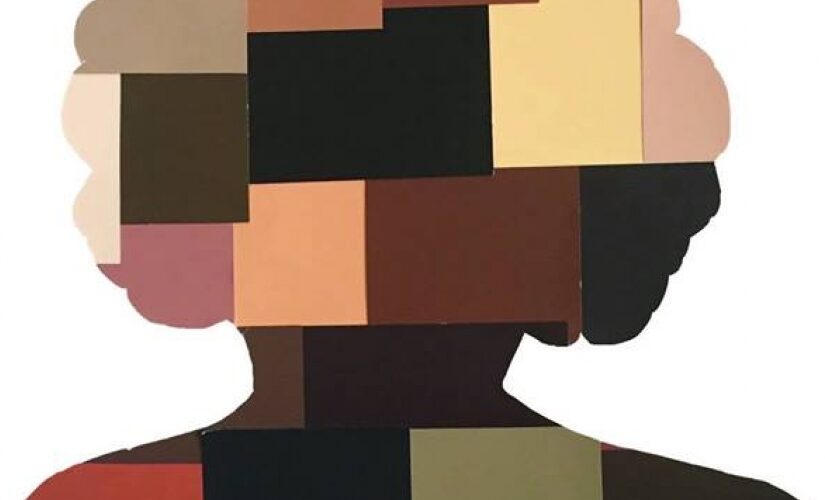
“The Bridge called my Back” illustrates black feminism, showing that it does indeed exist, while playing a huge part in intersectionality in the context of both gender and color. Many quotes in this narrative stuck out me but this one caught my attention right away- “When I was growing up, I read magazines and saw movies, blonde movie stars, white skin, sensuous lips and to be elevated, to become a woman, a desirable woman, I began to wear imaginary pale skin”
I chose this quote because we can all relate to it in some way- whether we are male or female or whether our skin is dark or light. I see many women (beautiful women) constantly trying to improve their physical appearance, but why are we constantly improving what is already beautiful? And more importantly, why do black girls feel the need to wear wigs and lighting cream and have thin noses? When we look on T.V, all we see are people with those features, especially when portrayed in a role as someone who is “beautiful” or “perfect.” I recently saw a plastic surgery ad where I saw a blonde woman with long blonde hair, a skinny body, perky boobs, sensual lips, and long nose. The ad described her as “perfect,” while using her an an example of what women can (and should) look like, while promoting this look. This ad reassured women that this perfect look would be easily achieved with just one phone call. it infuriated me, but this is just one of many examples of how the media depicts these features as what makes a women desirable and perfect. Beautiful black girls grow up watching this and then believe that they are not white enough or desirable enough since they do not look like the figure on TV that is portrayed as desirable. If they were growing up seeing more women who looked like them being portrayed on TV and in the media in more positive roles, they would not feel the need to whiten their skin and soften their hair.
This idea of black girls and women feeling not good enough takes me back to Kimberle Crenshaw in Mapping the Margins, specifically when it comes to intersectionality in women of color. Women of color have two identities which bring them discrimination- being black and being a woman. This opens the doors to many forms of oppression against them and closes the doors to many opportunities in which they are more than capable of achieving. It is not one thing when society has this view of women of color, but what is even more sorrowful is that these same women begin to unknowingly believe these things about themselves, being imbedded with thoughts that they are not physically good enough for social acceptance and desire. Since this is more prevalent in younger women of color, since they are easier manipulated by society, it is important that the media and society begins to change its depictions on what the “perfect” or more desirable woman should look like, giving black women the confidence they need to embrace their beauty and continue their fight for social equality.
POST 11
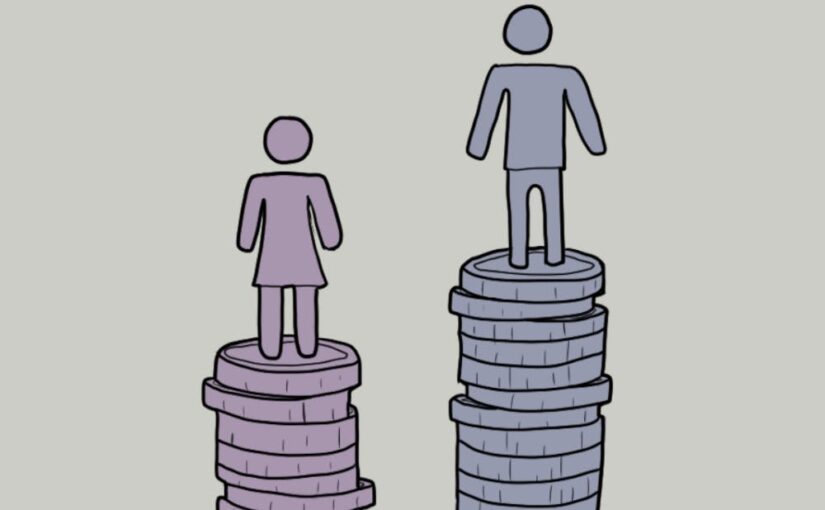
For my topic for salary wage gap between male and female in sports, it poses a lot of information based upon the major difference in salary these athletes receive. In my research, i have found that women receive less of a salary than a male athlete does and this difference is huge in numbers. Ultimately, i have found the idea upon how women athletes gets a far less salary than males and that they get far less exposure in sports as well. Not many people see how women can do the same as male and that they should be recognized by their talents. I have read also that sponsors and endorsements would offer less amount of commission and money when offered to a women athlete compared to men and this type of systemic ideology is unfair to the hardworking women that deserves to be treated as equals in society.

Post 1: How to Create a Post
- Sign into your Commons account.
- Once you get in go into WGST common website.
- Next click your class’s time.
- At the top of the page there is a plus sign, click that.
- It gives three options, you have to click the post option.
- Finally you’ll be transported to a page where you can write a post.
- After finishing your post you click the blue button that says publish.

