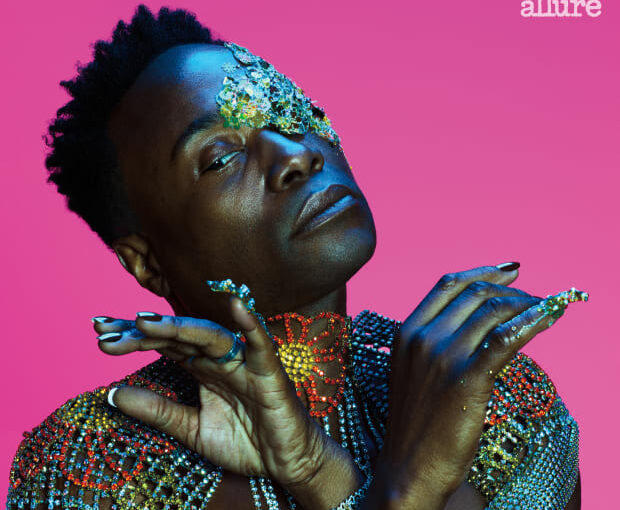
Billy Porter is a black American actor, writer, singer, LGBTQ+, and human rights activist. Most recently, he’s best known for his Emmy-winning performance as Pray Tell on FX’s Pose. While he does a great job at showing just how perfect life can be, his life has been far from perfect. See Billy isn’t just a successful black artist, he’s an openly gay black artist, who also happens to be a man. Being black is already hard as it is simply because of systematic inequality, but when we add the next layer of him identifying as a queer man, acceptance poses an even greater challenge. See the black community has always had a rocky relationship with the LGBT community. Part of this is because religion is embedded into the community. But even outside religion, there’s high teaching of homosexuality as wrong, especially for a black man. So when we look at power and privilege, it’s clear that Billy porters power is limited to a sense seeing that he doesn’t exactly embody the societal ideal image of what a black man should be. However, as an LGBT and human rights activist, he has inspired thousands and has given a voice to those who’ve felt like they’ve been marginalised. One could only imagine the amount of pressure it takes to navigate in a hyper-masculine homophobic world. Billy’s motto, he takes it one day at a time. Every day he wakes up and faces the world. Being black first, then queer. Eyes are constantly on him as there is a lot of pressure on him not to “slip up” and disappoint not only the black community but let down the LGBTQ. But while his basic human rights are up for legislation every day, that hasn’t stopped him from being his authentic self and educating people about celebrating differences. Billy Porter is here to stay and nothing is stopping him from taking over the world.
Category: Tues Only Section
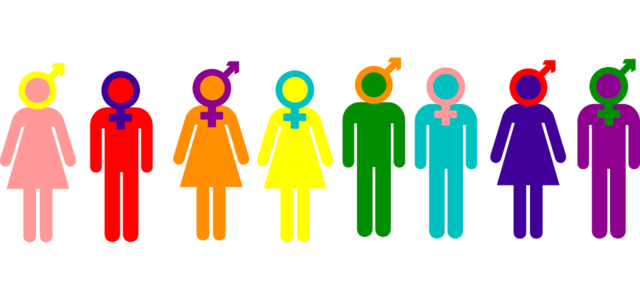
Post 2: What is gender?
Gender is the sex a person identifies themselves as. We see gender everywhere we go, an example of this would be bathrooms signs, whether it’s male or female. Society manages gender by limiting the options to male and female. Some examples of society reinforcing gender roles are making products specifically for the specific sex. By making toys like cars for boys and Barbie dolls for girls.
Gender relates to power and privilege because society has made this stereotype where men are seen as the working and dominant whereas women are see as the the housewife and submissive. This puts obstacles to certain genders versus others since some jobs are more dominate to a specific gender than others. An example of this would be the sports, the sport community is more dominated by men than it is by women. I think this is because it wasn’t recently until women started to get freedom and rights to do things the way they want to. I believe men benefit more off power and privilege since its less difficult for a male to get a job than it is for a female.
Growing up I’ve been taught that there are only 2 genders, male and female. But throughout the years, I’m starting to see that’s not true and that there are actually many more genders out there in the world. So to answer the question “How many genders might there be?” I honestly couldn’t say but what I could say is your gender is what u believe to be and what you want to identify yourself as.
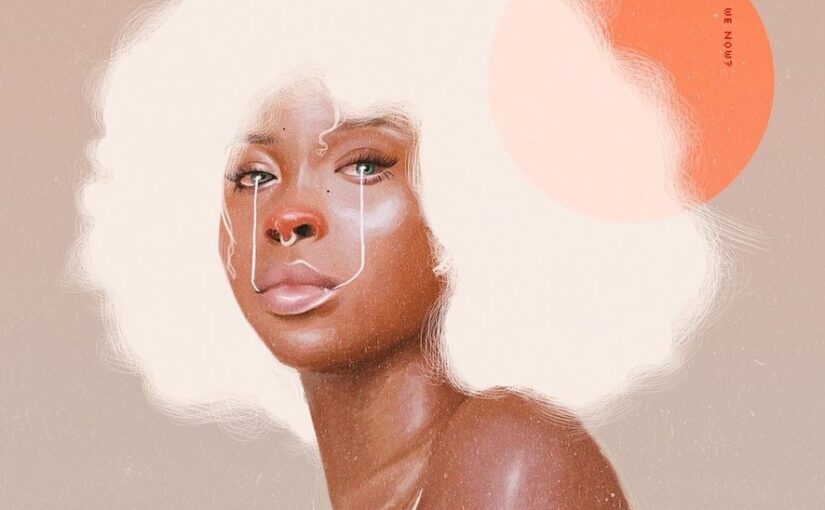
Post 14: Final Project
Over thousands of years, the music industry has evolved into a big playing field. Thanks to modern-day technology, the music industry is growing every single day. So many are taking the leap of faith to follow their dream and pursue music. However, one problem. The music industry is sexist. For my topic, I chose to explore racial and gender inequality as it pertains to black women in the music industry. See for Women in this industry and especially women of color, face a wide variety of problems in this male-dominated sport. From misogyny to sexual exploitation to stereotypical roles, women of color are always being told who and what they should be in order to win in this industry. Men are high-end titles awarded titles like producer, composer, record label owners/partner as well as a musician, while women have to settle with the lower end of the stick.
Whether we like to acknowledge it or not, all black women in this industry have and still are victims of systematic oppression. I think a great example is Lizzo. One of my favorite artists. Not just because of her obvious musical talent and megawatt personality, but her efforts to bring light to the constant body shaming women have to endure to be part of this business. Since rising to fame Lizzo has dealt with a lot of backlash in regards to her weight and her choice to embrace and celebrate not only her body but so many other women who have been deemed “too big” in the eyes of society. See the music industry has a certain criterion of what women should look like, especially black women. She should be curvy, have a small waist, and possessed big hips and butt. For decades, black women have been looked at as sexual objects for the pleasure of the heterosexual male viewer. The sad part about it is people actually capitalize and profit off of the bodies of black women seeing that sex sells. It’s bad enough black women have a hard time in this business due to their race, but adding on that extra layer makes it clear that unless you fit society’s beauty standard it’s harder to establish a concrete place in the music industry. And while Lizzo has done a phenomenal job at advocating on behalf of bigger women, she has also made it clear just how mentally draining and lonely working in this industry can be when you don’t fit into society’s box.
Another example is Willow smith. Risen to fame quickly at a young age, willow smith has endured a vast amount of societal norms and expectations as to who she should be. At only 20 years old, Willow recalls the time in her life where individualism peeked as she opened up about cutting herself as a way of coping with her problems. “I had just stopped doing singing lessons and I was kind of just in this gray area of ‘Who am I? Do I have a purpose? Is there anything I can do besides this?” This was during the time she had just released her 2010 single hit, Whip My Hair. It a song that went on to be very influential to little black girls all across America. But what many did know was the behind-the-scenes life willow had to live in order to have the success she had. From being forced to live a lie to constantly being questioned about her identity, Willow was constantly walked over and mentally abused as a way of making her into someone she isn’t. In the end, went into this gray hole of depression, and over the past few years, she has struggled to be present on social media due to society’s incapable to aid and assist black women.
In the end, it’s time that we start acknowledging the music industry’s inability to care for black women. From social norms to sexual exploitation, these various problems play a vital role in the black woman’s experience and in the end can be detrimental to how women of color are perceived in society. It is imperative that artists stop hyper-sexualizing women of color and normalize different bodies but also stop reinforcing social norms as a way to understand them. Something that has been going on convectively for over hundred years. Because, while we may be in a different time, it thinks it’s only right to say that when it comes down to black women they are at the bottom of the barrel.
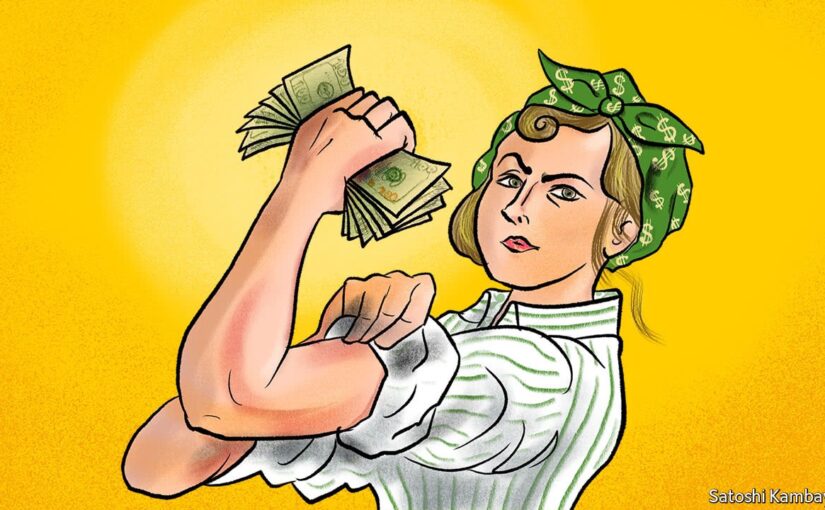
Class is in Session!
For my final project I chose to do a Syllabus for summer session 1 to introduce the topic of the financial wage gap between men and women. I felt as though this was most suitable for me because it allowed me to educate myself on a topic I wasn’t fully knowledgeable in. Although I won’t be actually teaching anyone what is on the syllabus but it was more learning for myself and hopefully for to whoever who does give it a look.
Gender + Identity
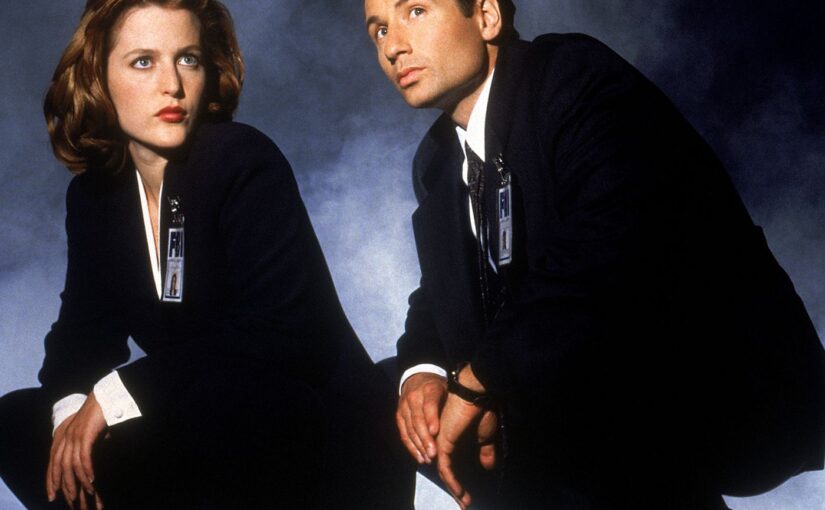
It’s hard to know really how many aspects of your identity you get to choose when you’re raised by people who are making decisions for you through your formative years. The movies you watch, the music that plays around you, your personality in response to your setting. Obviously as you grow older you get to choose more and more things for yourself, but now with social media and the constant image based content of sales being shoved in your face it almost makes identity even more confusing. I think the biggest factor in identity is capitalism because we are essentially being grouped into demographics (Gender being the first way to divide us into two groups upon birth) in order to be marketed to and this shapes our identity whether we actively notice it or not. Obviously the ones who are most benefitting from capitalism are white men, so white men have a lot of say as to what our identities are, which is obviously completely screwed up because that means when you start to form your own identity you have to rid yourself of all these preconceived notions of what your former self was or should be. It’s like starting out with a form of debt. …(I used the picture of Scully and Mulder because the stereotypical gender traits were swapped – Scully the skeptic and scientist – Mulder the believer).
Master’s Tools Response
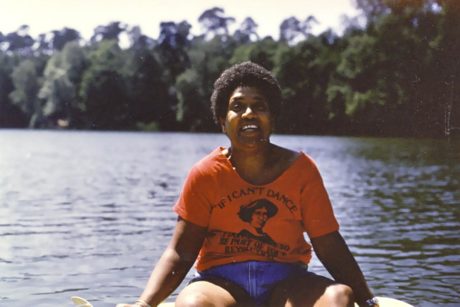
I kind of agree with this statement because I am both a pessimist and a purest. So when I think of dismantling a system I think of abolishing it, not reforming it. I think that the ideal would be to completely wipe something out and start over because if you have any bit of the original version left, I think it will return to its original form. And if you try to dismantle it with its own ways it can figure out your next move. I agree with the statement, but if your role is being an activist and trying to get people to join you, most people just aren’t that radical, and if you are trying to take something established down you need numbers. There was a line that Corey Booker said during a democratic debate a few years back “We cannot sacrifice progress on the altar of purity,” and as much as I HATE to agree with him because this line was used against my favorite progressive candidates (Bernie and Warren) about universal health care… He did have a point. At that time republicans were the majority in the Senate and held the office of president, and this was pre-pandemic, so things were different, and there wasn’t much of a chance. I do however think that there would be more of a chance had those primaries happened after the first part of lockdown, but still I’m not hopeful because our way of voting by electoral college is so conservative and racist that unless we abolish that too we won’t get what we want.
Anyways my point is I like the way Audre thinks in theory and I do agree with her, but I don’t think that much progress will be made if it’s an all or nothing ideal and to be able to even suggest that, is a privileged stance (and by privilege here I mean she is an artist and writer- she was able to transcend her role in the universal world in order to become her authentic self, and in doing so she can make these statements that other women of color who maintain regular jobs and normal lives would not be able to make and stand by without repercussion). Audre’s way of thinking is great on an individual level as an artist, but I just dont think it will work itself out to be the universal. Also all of these systems were built on the back of other systems that we would need to abolish. Like above when I mentioned healthcare and the electoral college, you’d need to get into a near infinite regress in order to properly dismantle the system and the systems they were built on. Otherwise everything “fixed” within these systems will just be topical. That is why though I like what she says and agree with the statement I just don’t see it as ever working out. Personally I just don’t think much change will ever be made in regards to anything progressive whether it’s her all or nothing approach or Booker’s small steps approach. Excuse my language but I think we’re all fucked and will continue to get more fucked.
Post 11: Research Summary
In summary, I learned a lot from my research for this project. I wanted to gain a better perspective on discrimination against women in various STEM fields and I ended up learning a lot about how that impacts retention and representation of women in said fields. Not only does the wage gap impact the finances of women, but it also impacts the representation of women. Most sexual harassment in academic institutions is likely to occur to trainees. It’s very understandable to want to quit after something like that has happened to you and blame it on the environment and not the man themselves. The man is the only one at fault in these situations even though the women tend to blame themselves and question their own actions. The statistics show that even though female representation is going up in health and life sciences, it has actually gone down in computer jobs since the year 1990. Dr Agarwal suggested anonymizing CVs during the recruitment process in order to look past internal biases that someone hiring may have without realizing. Most of the gender bias in STEM fields comes from the fact that there is not enough representation leading to men appearing to be the “more competent” ones and they end up being the ones hired over women for no reason other than internal bias. When women don’t see that other women are actually making it to the top of the ladder, it almost seems as if there is no point is trying to make it because there is no one actually there showing you that it is possible.
Post 10: The Master’s Tools
According to Audre Lorde’s essay, “The Master’s Tools Will Never Dismantle the Master’s House”. I definitely agree with this statement and would not change anything about it. In this metaphor, the master’s house is the patriarchy and the tools are what men used to diminish women and build up the patriarchy.
If something was on fire, the first thing you would choose to do would definitely not be to light a lighter. That simply would not make any sense and would only make the problem worse. Continuously putting down other women in an effort to rise to the top will not dismantle the patriarchy. In the end, it would only make it worse which is why I am agreeing with this statement.
Post 9: This Bridge Called My Back
One entry from “This Bridge Called My Back” that I considered to be important is the one entitled “I am what I am” by Rosario Morales. This entry was about various issues such as immigration, naturalization, and languages. It mostly talks about how the combination of all the things you are and know and identify as shapes you as a human being in society. This specific entry resonated with me personally because I am the first born in my family in America and I grew up only knowing Russian and doing things a specific way that other people thought was weird. Growing up I was embarrassed of speaking Russian to my family because it was different and no one else spoke any other languages.
In his entry, Rosario states “I am what I am and you can’t take it away with all the words and sneers at your command I am what I am I am Puerto Rican I am U.S. American I am New York Manhattan and the Bronx”. This quote really resonated with me because growing up I got a lot weird looks and comments on how weird it was that I ate my ravioli with sour cream and sometimes forgot words in English and said them in Russian by accident. I tried to hide it for a long time and avoid speaking Russian in public but as I grew up, I learned to be proud of it. My family immigrated here to since they got kicked out of Russia for being Jewish and I am Russian and Jewish and I am finally at peace with it and I am proud of who I am and how my nationality and religion shaped me into who I am now.
Post 7: Black Feminism
Audre Lorde wrote a poem entitled, “Who Said It Was Simple”. She wanted to put an emphasis on how mainstream feminism is problematic and focuses on cis/hetero/white women and ignores the rest of the women in society. The whole point of real feminism is to make sure that all people of all genders are equal, not to diminish any other kind of human’s issues. Kimberlé Crenshaw also emphasizes the importance of intersectionality in “Mapping the Margins” and her TED Talk “The Urgency of Intersectionality”.
In her poem “Who Said It Was Simple”, Audre wrote “But I who am bound by my mirror / as well as my bed / see causes in color / as well as sex…” In this statement she was saying how her identity is bound to her as a person and that no matter what situation she is in, she will always be a black lesbian and this can have an impact on how events occur.
At the same time, Kimberlé talks about how seeking help as a woman of color at shelters comes with many rejections and disadvantages as compared to white women. She shows in “Mapping the Margins” how intersectionality would allow more kinds of women to benefit from how society is advancing instead of leaving certain people behind.
Post 8: Annotated Bibliography
Katherine Michelmore, and Sharon Sassler. “Explaining the Gender Wage Gap in STEM: Does Field Sex Composition Matter?” RSF: The Russell Sage Foundation Journal of the Social Sciences, vol. 2, no. 4, 2016, pp. 194–215. JSTOR, www.jstor.org/stable/10.7758/rsf.2016.2.4.07. Accessed 4 May 2021.
This article explains how the wage gap between men and women in STEM fields impacts the retention of women in these fields. This article showed me that not only does the wage gap impact the finances of women, but also impacts the representation of women in various STEM fields.
PARTICIPANTS OF THE GLOBAL HEALTH FIELDWORK ETHICS WORKSHOP. “#MeToo Meets Global Health: A Call to Action.” Health and Human Rights, vol. 21, no. 1, 2019, pp. 133–140. JSTOR, www.jstor.org/stable/26727078. Accessed 4 May 2021.
This article explains how sexual harassment in academia stunts the progress of women in STEM fields. Most sexual harassment in academic institutions is likely to occur to trainees. It’s very understandable to want to quit after something like that has happened to you and blame it on the environment and not the man themselves. The man is the only one at fault in these situations.
Funk, Cary, and Kim Parker. “Women and Men in STEM Often at Odds Over Workplace Equity.” Pew Research Center’s Social & Demographic Trends Project, Pew Research Center, 21 Aug. 2020, www.pewresearch.org/social-trends/2018/01/09/women-and-men-in-stem-often-at-odds-over-workplace-equity/.
This article provided statistics comparing gender discrimination and sexual harassment against women in STEM vs how much men experience it. This article also showed statistics on how this affects the retention of women in the fields and how represented women end up being. In addition, it also provided statistics showing how black people in the STEM industry are also widely discriminated against and how this affects their representation. The statistics show that even though female representation is going up in health and life sciences, it has actually gone down in computer jobs since the year 1990.
Agarwal, Dr. Pragya. “Gender Bias In STEM: Women In Tech Still Facing Discrimination.” Forbes, Forbes Magazine, 5 Mar. 2020, www.forbes.com/sites/pragyaagarwaleurope/2020/03/04/gender-bias-in-stem-women-in-tech-report-facing-discrimination/?sh=48db402370fb.
In this article, this behavioral scientist explains ways that we can prevent gender bias and discrimination from happening in the STEM fields for the future. She suggests anonymizing CVs during the recruitment process in order to look past internal biases that someone hiring may have without realizing. Most of the gender bias in STEM fields comes from the fact that there is not enough representation leading to men appearing to be the “more competent” ones and they end up being the ones hired over women for no reason other than internal bias.
Antonio Gallego, José. “Women and STEM Field: a Long Journey Full of Hard Obstacles.” NEWS BBVA, BBVA, 8 Feb. 2021, www.bbva.com/en/opinion/women-and-stem-a-journey-full-of-obstacles/.
In this article, it is explained that the reason for the lack of female retention in STEM fields is due to the lack of women as role models. If you don’t see that women are actually making it to the top of the ladder, it almost seems as if there is no point is trying to make it because there is no one actually there showing you that it is possible. The reason this article actually caught my eye is because it was written by a man and it seems as though his intentions mean well, at the end he gives some tips to stop this discrimination from occurring. He almost seems a bit oblivious because he states that the reader should stop contributing to the problem, pay attention, and recognize that diversity is important. Although this is well meaning, it does nearly nothing to actually solve the issues at hand.


