Final Project Plan

By: Olivia Francis

My topic will be violence against women in politics. To understand my topic, I need to know the background and history. I need to know the big and small details. My topic relates directly to Women’s Studies, Political Science, Public Administration, and International Relations. My topic directly concerns race, gender, history, social media, news, and social status. Each factor comes into consideration since I am discussing women in politics. Women in politics have a comprehensive history, and women have worked vigorously to have a voice in politics. Some women, unfortunately, have to work harder than others when it is based on race. Social media also tends to ridicule women in politics based on their gender and where they come from, and their social status. To discuss these factors successfully, I will need to do extensive research on different women in politics and how these factors have affected them. I need to know exactly how these factors affect their daily duties and why. 

Post#10: The Master’s Tool

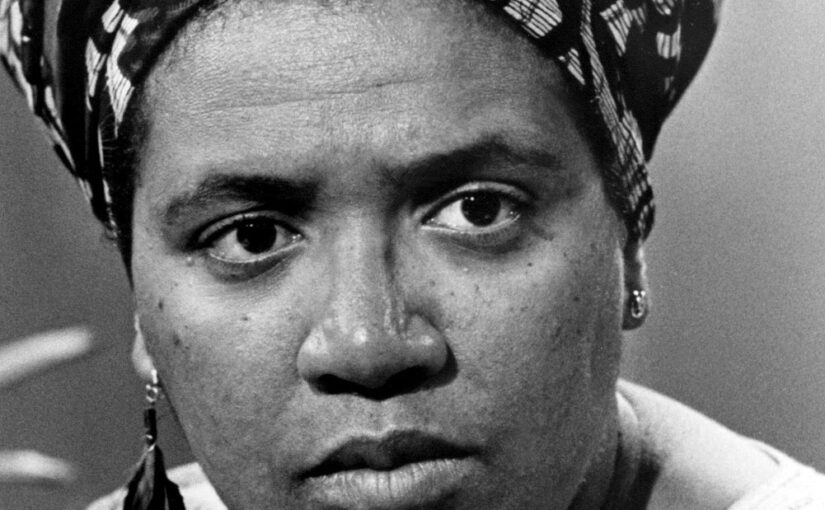
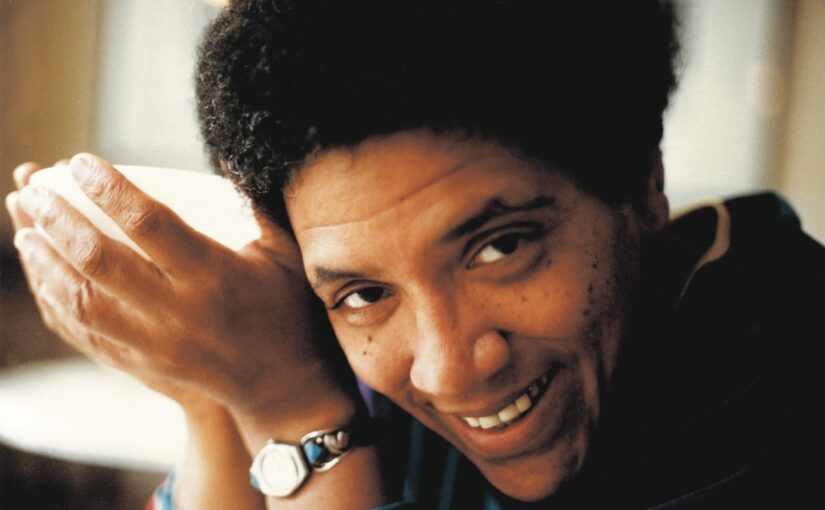
I agree with Audre Lorde’s essay. All women are different in unique ways like culture, physical traits, and much more but we should not be treated differently depending on our sexuality or skin color. The major point of this essay is that we cannot solve problems of oppression working with the tools of a system of oppression. Scholars cannot rely on the tools of academia to combat racism. Yes, we’re different, but we should not completely separate ours because one may believe their struggle is more important than another. We need to understand and embrace our differences.

Post #8: Annotated Bibliography

  • Dr. Awan, Zamurrad. “Pakistani Women in America,” The Nation. 15 November, 2017. N.p. https://nation.com.pk/15-Nov-2017/pakistani-woman-in-america
    • I used this source because it talks about the vast differences between America and Pakistan. It talked about the first hand experience the author had when he was in Pakistan. As a man he was able to spot many gender imbalances and wrote the patriarchal society in Pakistan.
  • “Gender Equality and Female Empowerment,” USAid. 10 February, 2021. N.p. https://www.usaid.gov/pakistan/cross-cutting-themes-good-governance-and-gender-equity
    • I used this source because it talked about female empowerment and equality for both America and Pakistan. I really liked this article because it talked about education, health, women in agriculture, etc. It had many different aspects that showed differences for women and men; which is why I used this source.
  • Mahar, Mehwish. “Reasons Behind Women Inequality in Pakistan,” Modern Diplomacy. 31 March, 2020. N.p. https://moderndiplomacy.eu/2020/03/31/reasons-behind-women-inequality-in-pakistan/
    • I used this source because it talked about why there is inequality for women in Pakistan. It gave background knowledge which was very helpful for my project.

Presentation Scavenger hunt post 13 Ashley Fung

I really enjoyed taking part in this scavenger hunt because it has allowed me to explore all the fascinating topics that stuck out to my peers and had really opened my eyes to a lot of gender based struggles that many individuals have had to go through. Overall it was also awesome to see a bit of personality from my peers since class was hosted on zoom I could not really make many genuine connections with my peers but since the independent projects were all very creative it really showed me how talented and how much dedication all my peers put into their projects and that makes me happy because it seems like we all had fun with our projects along with providing very interesting and insightful information which really captures how much this class has taught us all.

Post# 11: Research Summary

The topic I chose was to educate people on how the machismo of the Latin culture has affected both men and women. As I was researching and looking for references, I found so much information about how machismo affects men firsthand. As a member of the Latin community, I have come to know that men find it hard to stand up to other men about this issue or question it. Unfortunately, this belief is passed down and will continue to be unless we inform others about it.


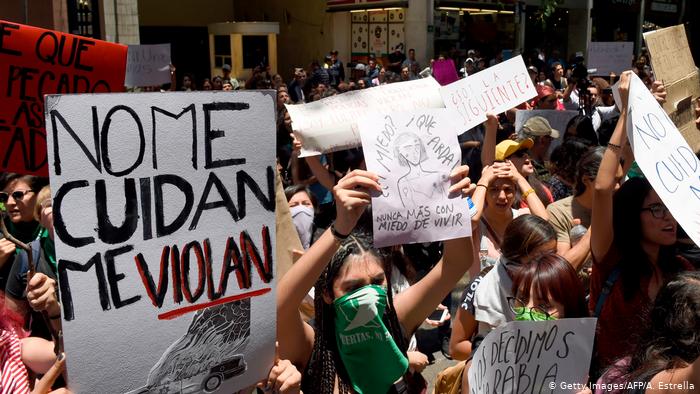
I learned that many places, like Mexico, have had severe problems relating to the machismo mentality. Many of the crimes where women are murdered are ignored and stay unsolved. Crimes of men against women are ignored and are known as femicide. I hope that the Latino community can change its mentality. They can prevent the toxic traits that come with it.

Post# 10: The Master’s Tool

I agree with Audre Lorde’s statement that the master’s tool will never dismantle the master’s house, but it is neither impossible. I agree that sometimes they may tell us that we can only to make the oppressed feel unthreatened. We need to continue trying to make a difference. I believe that Audre Lorde should have rephrased her statement. The phrase should have been something along the lines of, “The master’s tools can dismantle the master’s house if we hit it hard enough.” I feel that this makes more sense because it allows people to believe that they can enable change.

Post# 9: The Bridge Called my Back

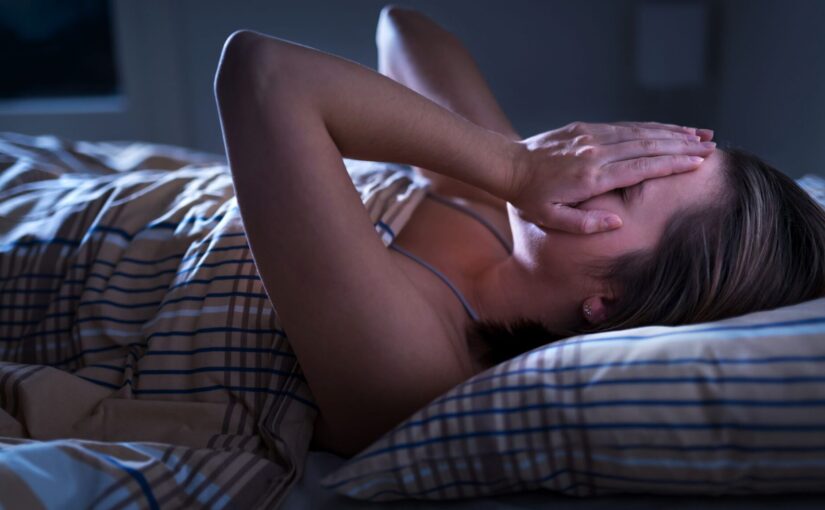
Dreams of Violence by Naomi Littlebear was the entry I chose for this post. This entry was interesting to me because of how Littlebear described the nightmare that she was having. The first time I read this passage, I was a little confused about the dream that she was having. I realized that in many of the dreams most of us have, she was constantly changing locations as many of us do in our dreams. When we wake up, it is hard to recall what we have dreamt and be confused that we couldn’t follow the dream correctly because of the constant change of location.


She starts her dream by talking about the loud sounds that reminded her of fights she would often hear in her childhood. She also explains that she is trying to run from the sound with her cousin. They had gotten away, but she felt another source of violence growing near as she was getting closer to home. She remembered that there at home, she was about to enter a place where she was in danger. She remembered her past trauma, the one where she would be beaten by her grandmother and always provoked her somehow. She also explains that her grandmother was living her nightmares as well. They both have trauma that sneaks into their dreams often.


In the passage, Littlebear explains her thoughts on the nightmares that she and her grandmother experience, “We both have no choice but to be survivors though the fears are still there.” I think this quote perfectly summarizes what she was trying to say in this passage. You can choose to let your fear lead your life or you can choose to be a survivor and ignore them.

Black Feminism

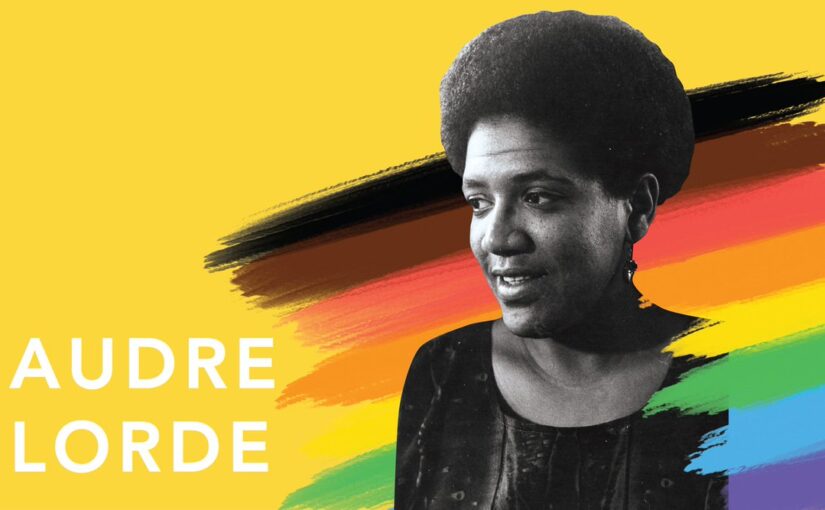
Kimberlé Crenshaw and Audre Lorde are two Black Feminist we have studied this term. I believe that they both convey the idea that feminism, for anyone who is not white, English speaking, and wealthy, is inaccessible. Feminism at the time (and for some people, even today) was only for a certain type of white woman.

Crenshaw in her TEDTalk, The Urgency of Intersectionality, started off with a list of Male victims of Police Brutality and a list of Female victims of police brutality. Most of the group was familiar with the men who have died, but not the women. She goes on the mention that this is an example of intersectionality and how these women being Black and Women, made them a new level of disadvantage. It wasnt just that they were Black or Women, they were Black women. She goes on to explain the case of Emma DeGraffenreid who fell through the cracks of the justice system because of the lack of “framework” to think about her case, intersectionality.

Lorde’s poem, Who Said it Was Simple, is elusive, for me personally. Though undeniably powerful, it’s not fully clear what it’s about. I believe it is about her frustrations towards the feminist movement that has left her, and people like her, behind. Though they sit there planning their liberation and rally, they do not notice or reject the systems that are oppressing other women, such as racism. She ends that stanza by saying that she is bound by her bed as well has her mirror, pointing to her skin tone and sex, and ends the whole poem by saying which of me will survive. Her poem also is about intersectionality and how these earlier movement did not make room for people who were different. The part that confuses me is the fact the title, what does she mean by it’s not simple? Is it the idea of intersectionality? Is it the way feminism worked? Perhaps how she related to the movement and which part of her identity would die off?

Either way, both are powerful and moving pieces that questioned Feminism of the day in their own way.

The Masters Tools

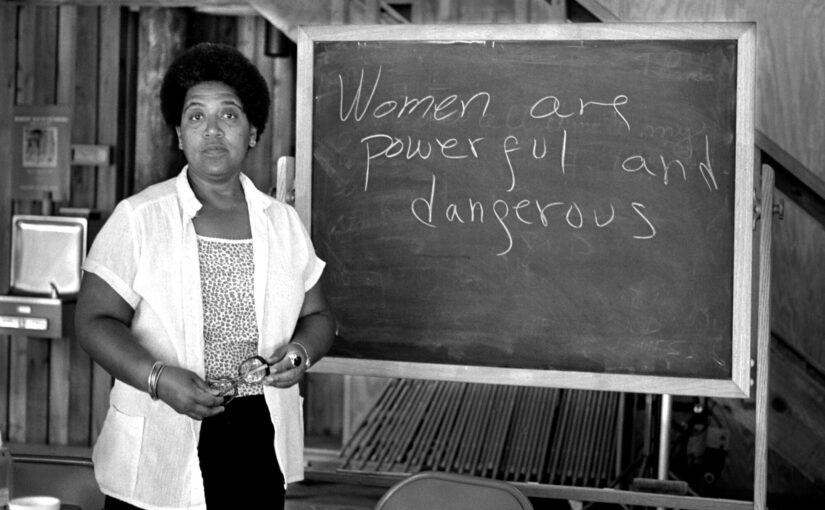
Audre Lorde in her piece, “The Masters Tools Will Never Dismantle the Master’s House”, explains her experience at a conference and how this sparked this paper. She believes that patriarchy will never be dismantled if women of all differences don’t come together and stand up for each other’s rights. Women of color, lesbians, poor women, and women from third world countries were the identities I noticed she mentioned who she believes are often left from the mainstream Feminism.

She has this particular quote that I thought was effective in communicating her idea of feminsim:

“As women, we have been taught to either ignore our differences or to view them as causes for separation and suspicion rather than as forces for change. Without community, there is no liberation, only the most vulnerable and temporary armistice between an individual and her oppression. But community must not mean a shedding of our dif-ferences, nor the pathetic pretense that these differences do not exist.”

Post# 8: Annotated Bibliography

Rios, Victor, director. Let’s Get Rid of Toxic MasculinityTED, www.ted.com/talks/victor_rios_let_s_get_rid_of_toxic_masculinity/up-next. 

The citation above is of a video I found very touching. I was really impressed by how honest and almost vulnerable the speaker was being towards the audience. I especially loved his poem “brown boy”. In his poem, he is speaking to all Latino men and telling them that it is okay to not follow the male standard of the Latin community.

Sáez, Emara. “Machismo: Toxic Masculinity Within Hispanic Culture.” Best of SNO, bestofsno.com/44900/features/machismo-toxic-masculinity-within-hispanic-culture/. 

This website is why I felt the need to talk about this issue. The women in the main video of this article shows how frustrated the women are in these countries and that they are fighting to be heard. This source had a lot of great information that I was able to use for my project.

TEDxTalks, director. Machismo Hurts Men Too | Alejandro Jimenez | TEDxMileHighYouTube, YouTube, 14 Aug. 2017, www.youtube.com/watch?v=tue7ECtTIMg. 

I like how raw TED talks can be so I really wanted to add another TED talk to the syllabus. This speaker talked more about his personal life and witnessing machismo first hand. He recalls his personal experience and how it affected him later in life. I wanted my “students” to understand that it doesn’t only affect the women of our society but also the men.

WANpoetry, director. Xavier CoolKid – “Latin Boys Don’t Cry” @WANPOETRY (TGS 2017)YouTube, YouTube, 22 Nov. 2017, www.youtube.com/watch?v=ibyrk9cDc9k. 

This video is of Xavier Coolkid reciting his poem about machismo. He was not only speaking as a man but as a gay men in the Latin community. He was sharing his personal experiences of being pressured into fitting a mold and how it affected his mental health.

Whelan, Robbie. “’A Horrible Culture of Machismo’: Women Struggle With Violence in Mexico.” The Wall Street Journal, Dow Jones & Company, 4 May 2019, www.wsj.com/articles/a-horrible-culture-of-machismo-woman-struggle-with-violence-in-mexico-11556978401. 

This article speaks further about the many unsolved cases of women who have been murdered. These women want the world to know that they are being ignored in their country and that their lives continue to be endangered from the men around them.

“Women Rise Against ‘Toxic Machismo’ in Latin America.” Fair Trade Certified, www.fairtradecertified.org/news/latin-america-machismo. 

This article shares the experiences of women who have escaped the machismo culture and are moving forward into a safe and better life. They want to give a better future to their daughters and granddaughters.