Post 14 – Final Project

Misinterpretation of Toxic Masculinity in South Asia

What Women Want: Women Are Less Attracted To Masculinity And Men Are Less  Attracted To Femininity

By: Shai Hutchinson

For my project, I wrote a syllabus for a six week course that covers the topic of the misinterpretations of toxic masculinity in South Asia, focusing on Bangladesh and India. Throughout this course I will be pointing out the stereotypical views in which toxic masculinity exists in these countries, through the observation of culture and religion as a common influence used by the media, while also analyzing the nature of toxic masculinity in South Asian men that is heavily portrayed in the media. My research has shown that this toxic masculinity is also to blame for the large oppression of woman in these countries, especially when it comes to rape and domestic violence. My course will be challenging this research, by opening the eyes of students to the actual nature of global toxic masculinity, rather than what the news and media would like us to think. After giving students the necessary resources, they will then have a chance to formulate their own argument on this topic in a presentation and paper.

Post 12: Presentation

https://docs.google.com/presentation/d/1gl_FdDU5cJwRBQ_kPO3Fi4rPDTnWDdc4VLA_Omkqi7Y/edit?usp=sharing

Social Media causes a serious problem on woman’s mental health in todays day in age. Being a woman myself I am constantly faced with picture perfect females who I become very envious over. Without a confident personality it is very easy to be put in a rhythm of scrolling through social media and comparing ones self to others. By doing this the constant battle of social pressure is placed on woman everyday.

Research Summary

Women that are politically involved experience violence almost every single day worldwide. Many are not aware of the severity of violence, and we must bring attention to this topic. While women have come such a long way historically, there is still a long way to go. No matter how many milestones that women in politics reach, there is always a considerable risk for violence against them. Women in politics receive death threats, continuous hate comments, and people have tried to assassinate women in politics just because they believe they do not belong. Many factors further affect a women’s job in politics, such as race, sexual orientation, gender, social class, the mass media, news, and history. These factors alone make it even more difficult for women to be politically inclined and voice their opinions. We must bring awareness to women in politics who experience violence because it needs to end. Women should not have to live in constant fear just because of their gender. 

Annotated Bibliography

Alter, Charlotte. “Inside Rep. Alexandria Ocasio-Cortez’s Unlikely Rise.” Time, Time, 21 Mar. 2019, time.com/longform/alexandria-ocasio-cortez-profile/. 

This source is written by a national correspondent with Time named Charlotte Alter. The writer conducted a direct interview with Rep. Alexandria Ocasio-Cortez, so this source is reliable and allows me to gain insight into a female politician’s daily struggles. This source explains how Cortez got her start in politics and the daily struggles that she goes through. Using this source will help me focus on the factors that directly affect women in politics and target the long-term effects of these factors on women involved in politics.

“A Brief History of Women in American Politics.” PBS, Public Broadcasting Service, 12 June 2016, www.pbs.org/weta/washingtonweek/blog-post/brief-history-women-american-politics. 

This source was published by PBS also known as, Public Broadcasting Service, which is a very well known broadcasting service. Using this source allows me to learn about some of the history of women in politics and allow me to broaden my knowledge on some of the very first women in politics such as women in congress. This source talks about many different women who have dedicated their lives to politics and gives specific examples of a speech made by Hilary Clinton that talks about women’s rights and reaching a huge milestone. With this source I will be able to focus on some of the first women in politics and more well known female politicians. 

Gurirab, Theo-Ben. “Women in Politics – The Fight to End Violence Against Women.” United Nations, United Nations, www.un.org/en/chronicle/article/women-politics-fight-end-violence-against-women

This source was written by the president of the Inter-Parliamentary Union, and Speaker of the National Assembly of the Republic of Namibia, and the Former Prime Minister known as Theo-Ben Gurirab. The article was published on the United Nations website, which is internationally well known. In this article, Gurirab writes about how women in politics have always been in danger. This source also talks about how there is constant violence against female politicians all over the world. This source will help create my Public Awareness Campaign that raises awareness of the dangers that women in politics have to go through just because of their gender. 

“Milestones for Women in American Politics.” CAWP, Rutgers University, 3 May 2019, cawp.rutgers.edu/facts/milestones-for-women. 

This source was published by the Center for American Women and Politics at Rutgers, The State University of New Jersey. This source is a fact page all about women in politics. The fact page starts with some of the first women to ever engage in politics and ends with recent women who have been appointed to serve in the White House by President Joe Biden. The fact page serves as a timeline that begins in 1848 and ends in this present year, 2021. With this source, I can see the women in the United States who have been involved in politics since 1848 and the positions they were appointed to. This timeline will allow me to talk about the progress of the women’s rights movement and how there is still so much more work to be done today. 

Women, UN. “Violence Against Women in Politics.” UN Women, 2014, www.unwomen.org/en/digital-library/publications/2014/6/violence-against-women-in-politics. 

This article was written by UN Women and was published on the United Nations women’s website. This source directly explains the violence that women in politics experience in South Asia and how women are afraid to engage in politics or voice political opinions. Using this source will let me reiterate the constant fear that women in politics live through and bring awareness to how common it is for women in politics to be threatened with violence all around the globe. With this source, I can bring attention to women in the United States and women worldwide who experience violence for being involved in politics. 
Final Project Plan

By: Olivia Francis

My topic will be violence against women in politics. To understand my topic, I need to know the background and history. I need to know the big and small details. My topic relates directly to Women’s Studies, Political Science, Public Administration, and International Relations. My topic directly concerns race, gender, history, social media, news, and social status. Each factor comes into consideration since I am discussing women in politics. Women in politics have a comprehensive history, and women have worked vigorously to have a voice in politics. Some women, unfortunately, have to work harder than others when it is based on race. Social media also tends to ridicule women in politics based on their gender and where they come from, and their social status. To discuss these factors successfully, I will need to do extensive research on different women in politics and how these factors have affected them. I need to know exactly how these factors affect their daily duties and why. 

This Bridge Called My Back: Brownness*

The essay I chose is titled “Brownness*” by Andrea Canaan. Canaan describes her experience growing up as a brown person and having access to both rich white spaces and poor brown spaces. She talks about how her brownness was always negatively compared to whiteness by other brown people, highlighting how brown people contribute to their own stereotyping. I resonated with this essay and experienced how out-of-touch some POC can be and witnessed their unwillingness to intermingle or communicate with those outside of their race. I’ve also witnessed POC perpetuate harmful stereotypes, but I believe (in some) it stems from self-hatred. 

This essay relates to the others in the collection because it too discusses the struggles of acceptance of oneself while the world constantly puts you down. A quote that stood out to me reads as the following: “We remained degraded inside ourselves and we continued to empower others to control us.” Canaan is calling out brown people’s denial that no matter how great a brown person might be, they will never be close to being dignified like a white person. She mentions how brown people adapted self-depreciation as a survival mechanism so that we don’t feel too hurt when a white person hurts us. I find that POC often shrinks themselves when in white spaces to seem unassuming and non-threatening. And even when we lift ourselves and our people up, inside we still yearn to be accepted in such spaces. Another quote that stood out to me is: “The enemy is brownness and whiteness, maleness and femaleness.  The enemy is our urgent need to stereotype and close off people … This closed and limited view blocks women embracing women, brown women embracing brown women, brown women embracing brown men, brown women  embracing white women and women embracing men.” Canaan explains how abiding by stereotypes disallows people from making meaningful connections with someone who’s different. We should embrace our differences so we can live most harmoniously. 

The Master’s Tools

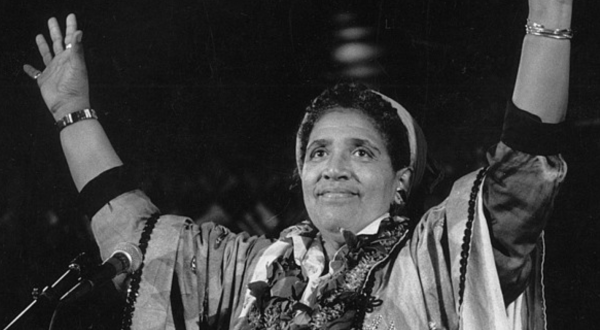
I agree with Audre Lorde’s statement “The master’s tools will never dismantle the master’s house” and I don’t think the statement needs modification. This statement to me means that we can’t fight fire with fire; we can’t fight ignorance with ignorance. What is the good in using the “tools” that harmed us to harm other people. I believe the tools represent the patriarchal society we live in. Lorde illustrates her statement when she states “Women of today are still being called upon to stretch across the gap of male ignorance and to educate men as to our existence and our needs. This is an old and primary tool of all oppressors to keep the oppressed occupied with the master’s concerns. Now we hear that it is the task of women of Color to educate white women… This is a diversion of energies and a tragic repetition of racist patriarchal thought”. By continuing the cycle of coddling our oppressor’s “ignorance” (when in reality they have the resources to educate themselves) it does nothing to propel us forward. It’ll just repeat itself again, leaving us oppressed. I love how Lorde calls out the cishet white women’s exclusion of WOC and poor women voices and ability to reep the benefits from the feminist movement. WOC and poor women are far too often ignored even though they do the brunt of the work in the feminist movement, and to say it is their responsibility to educate cishet white women excuses white women’s ability to benefit from the patriarchy we live. 

Some might argue that it would be beneficial to utilize the master’s tools as a way of leveling the playing field or reclaiming the tools as ours but I think that this goes against everything women have fought for and we then become the thing that we hated. I agree when Lorde states “They may allow us temporarily to beat him at his own game, but they will never enable us to bring about genuine change” and I believe that genuine change will not be achieved if we don’t radically reform the current patriarchy.

Final Project: Abortion RIGHTS Across the World.

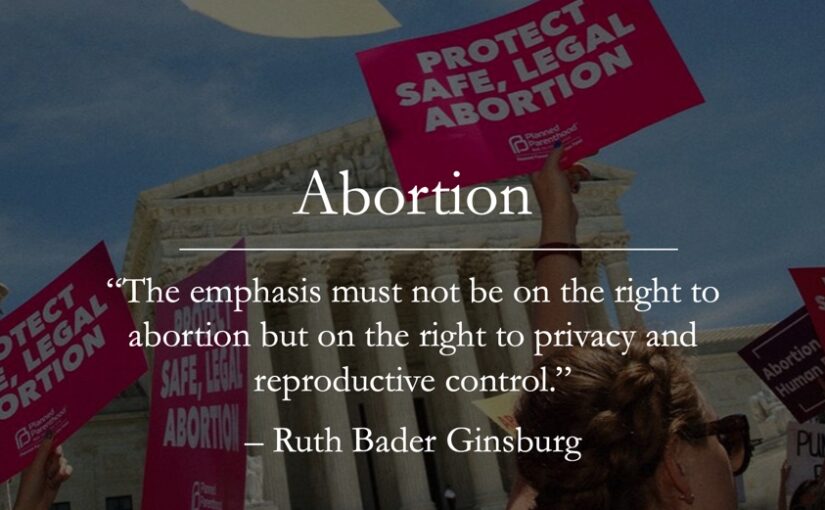
My independent project was made to focus on abortion rights in 2021 when I say this I mean the limitations and the hardships ALL women are going through in order to have an abortion. I chose this topic because I wanted to further the understanding and misconceptions about abortions and the legality of them across the world. Where can women get legal abortions??  how many places in the world women can’t get abortions?? I compiled research and stories on media platforms and use databases from around the world to put a spotlight on the current realities of abortions and misconceptions around the world. Highlighting this topic was important for me because women should have safe access to abortions across the world. This fear has gone on for too long and should no longer affect women.

B.G 2021 WGST

This was my take on a political cartoon, that if I made one specially about abortion across the world this would be the image I would want to portray.

post 10

In Audre Lorde’s “The master Tools Will Never Dismantle the Master’s House”, she says “As women, we have been taught either to ignore our differences, or to view them as causes for separation and suspicion rather than as forces for change”. This quote is implying that women are seen as different in society and that they have to adapt to the pressure of being “abnormal”. Women needs to view themselves as a reason for being different than forced to change to something you are not. Women are often subjugated as inferior to men. So this quote emphasizes the importance of standing for what you identify as and be happy with who you are.