Post 12

Untitled presentation – Google Slides

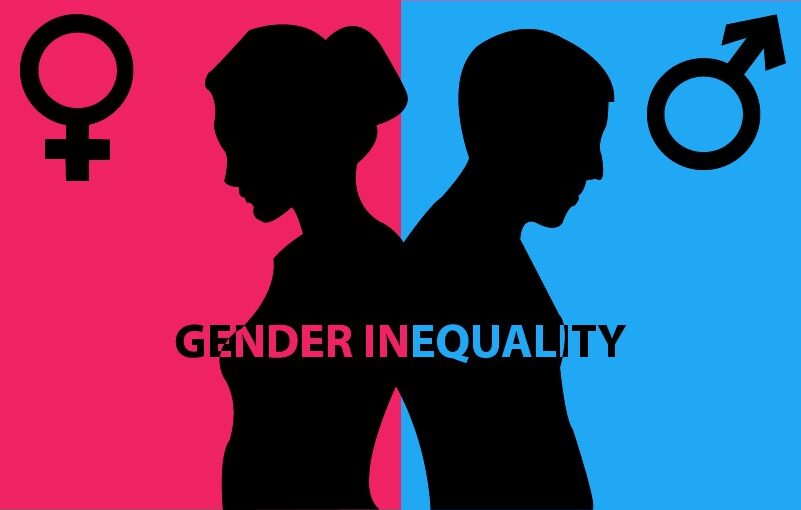
The topic of empathy and compassion being a key difference in the male and female sexes has long since fascinated me and many others all across the world. The childish phrase boys are stronger, girls are smarter seems to me a perfect reflection of the way society sees these gender roles. Boys and me are expected to be strong and not show emotions in difficult times and thus not appear to portray empathy in times of distress and girls are conditioned from an early age to be open and emotionally intelligent, meaning they are to be receptive to the feelings and pain of others. As emotionally intelligence is proven to be amongst the highest indicators of success in many fields across life, the fact that society expects women to be more empathetic and receptive to other people’s feelings explains that notion we all internalize as children that girls are smarter and since boys don’t show weakness and emotion, they must be inherently stronger. This line of thinking produces a multitude of problems in society, such as toxic masculinity, gender stereotypes and wage gaps along with much, much more. For that reason I sought out to question and understand why, exactly society general deems women to be more empathetic and compassionate than men.

Final Project

The Politics of Birth Control

Contraception has been practiced for centuries worldwide. Women ate herbs or drank brewed roots in order to make themselves sterile. Some couples would practice abstinence and withdrawal, while women inserted objects to prevent pregnancy. (Himes 6-13) These methods were ineffective, and it was not until the 1800s that more reliable methods were created.  However, with the creation of these new contraceptive methods came new laws preventing their use, distribution and even reading about the products. When a woman becomes pregnant, she should have the option to legally keep it or terminate the pregnancy, every woman should have the right to chose what happens to her body, abortion and birth control therefore should be a personal issue not a legal one.

The first law prohibiting the use and distribution of contraceptives was the 1873 Act for the Suppression of Trade in, and Circulation of Obscene Literature and Articles of Immoral Use (Comstock Act). This Act prohibited the distribution of literature about birth control and authorized search and seizures for those suspected of providing contraceptives or literature about contraception. (Dienes 36-37). Birth control was blamed for promiscuity, prostitution, and all other perceived vices at the time.

Margaret Sanger believed that “the first right of the child was to be wanted” (Dienes, 80), and fought to repeal the Comstock Act, giving poor people access to birth control methods. In 1916, Sanger along with her sister and supporters, opened the first birth control center in the United States, in Brooklyn, New York. However, the clinic was shuttered by the police ten days after opening. Sanger later had a small victory when Judge Crane agreed that phsicians could prescribe birth control to women for therapeutic purposes (Dienes, 86-87).  In 1923, Margaret Sanger legally opened the first birth control clinic in Manhattan. Although Sanger’s reasons for fighting for birth control rights was to increase the population of the white race while controlling the reproduction of undesirable races, a form of eugenic activism, her work made birth control available to poor people who could not previously access these services and she pioneered a movement that helped women of all races gain greater control of their family size (Parenthood).

In 1938, Judge Augustus Hand ruled that the U.S. customs could not prohibit the importation of contraceptives as the 1873 Comstock law was based on inadequate information, however, this was at the Federal level and States could still implement their own rules (Gordon, 227). Women throughout America wanted to get access to birth control even though it was illegal at the State level. This was during the Great Depression and many Americans lived in poverty and welcomed the news of being able to have sex without worrying about more children. In their effort to legalize birth control, the movement blamed urban crime and drug use on overcrowded cities, and the only solution was to limit the number of children born in these areas. They promoted birth control as a means of population control (Gordon, 283).

It was not until 1965 in the Supreme Court case of Griswold versus Connecticut that contraception was decriminalized. The Court ruled that a married couple had a right to privacy while in the confines of their bedroom and it was unreasonable to search and seize items from a couples home (Baer, 98-99). At this time, even though illegal in many states, millions of women were taking the pill which had been approved by the Food and Drug Administration to treat gynecological disorders (Gordon, 288). Single women were given the right to make their own choices regarding reproduction in 1972 when the Supreme Court, in Eisenstadt versus Baird, ruled that as individuals they had a right to privacy just as married women did (Baer, 73).

Today these laws seem archaic, and I am certain that in a few years, abortion laws will seem outdated as well. Women seek out abortions whether legal or not. In 1970, Hawaii, New York and Washington were the only states to offer legalized abortion. When the Supreme Court decriminalized abortion in the case of Roe versus Wade in 1973, this provided women with safe legal options to end their pregnancies. Prior to this ruling, women depended on incompetent and sometimes dangerous individuals who provided the service. At times, they would perform the procedure themselves, which were sometimes fatal. From 1969 to 1973, an underground abortion service, code named Jane, operated illegally to assist women with abortion services, from different backgrounds, races and circumstances (Kaplan, xvii).  States however have varied laws targeting abortion rights, from parental consent to funding. It is very rare that the Supreme Court hears abortion cases, which has resulted in States imposing tight restrictions on clinics and doctors who provide the service (Baker). Today, women should be given the full rights over their bodies.

Works Cited

Baer, Judith A. Historical & Multicultural Encyclopedia of Female Reproductive Rights In the United States. Greenwood Publishing Group, Incorporated, 2002. Ebook.

Baker, Carrie N. The History of Abortion Law in the United States. 14 September 2020. <https://www.ourbodiesourselves.org/book-excerpts/health-article/u-s-abortion-history/>.

Dienes, C. Thomas. Law, Politics, & Birth Control. University of Illinois Press, 1972.

Gordon, Linda. The Moral Property of Women: A History of Birth Control Politics in America. University of Illinois Press, 2002.

Kaplan, Laura. The Story of Jane the Legendary Underground Feminist Abortion Service. Chicago: The University of Chicago Press, 2019.

Parenthood, Planned. The History & Impact of Planned Parenthood. 2021. <https://www.plannedparenthood.org/about-us/who-we-are/our-history#:~:text=On%20October%2016%2C%201916%2C%20Sanger,control%20clinic%20in%20Brownsville%2C%20Brooklyn.>.

Sources & Annotated Bibliography

“Street Harassment” article, RAINN, Rape, Abuse & Incest National Network. https://www.rainn.org/articles/street-harassment

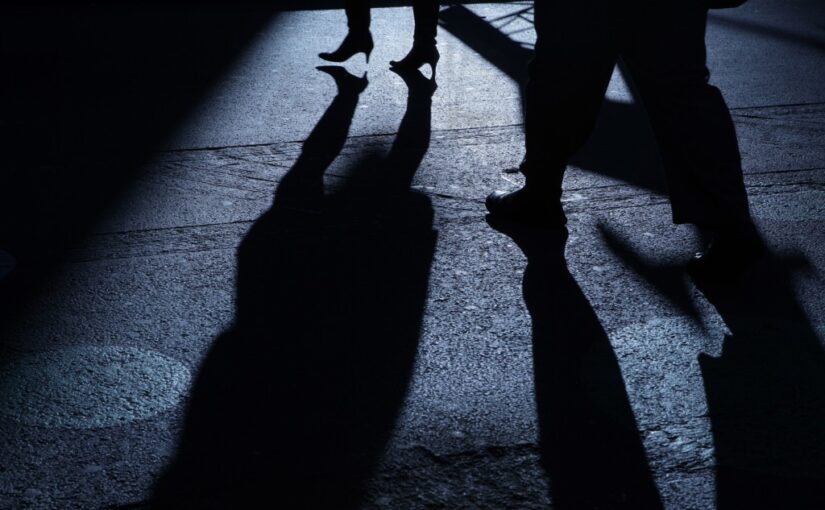
This article details the unwanted behaviors that are included under the umbrella of street harassment. It explains the effects of street harassment on different issues such as human rights, communities, and financial effects, and provides methods of action or interference for victims and bystanders of street harassment. This article helped me gather information about the different unwanted behaviors victim of street harassment face. This was useful for my project when I was looking to for examples of such behaviors that I will present in a cinematic way.

This article from RAINN is reliable and credible by academic standards because RAINN is the nation’s largest anti-sexual violence organization. RAINN created and operates the National Sexual Assault Hotline in partnership with more than 1,000 local sexual assault service providers across the country and operates the DoD Safe Helpline for the Department of Defense. RAINN also carries out programs to prevent sexual violence, help survivors, and ensure that perpetrators are brought to justice.

RESPONDING WHEN YOU’RE STREET HARASSED” article, Hollaback!. https://www.ihollaback.org/responding-to-harassers/

This article educates its readers on the different methods available to confront street harassers. In my creative project, I was looking for a way in which the protagonist of my short film will be able to confront the catcaller she faces on a daily basis. The three steps guide by Hollaback! (trust your instincts, reclaim your space, and practice resilience), provided me with the emotional character development I needed in order to create the protagonist’s character arc.

This article from Hollaback! is reliable and credible by academic standards because Hollaback! is a global movement that aims to end harassment and change the culture that makes harassment acceptable. This organization works in several ways such as collecting and sharing stories of harassment, training individuals and organizations to respond to, intervene in, and heal from harassment, and growing and developing leaders inside the larger movement to end harassment.

Creative Responses” article, Stop Street Harassment (SSH), https://stopstreetharassment.org/strategies/creative/

This article provides actual documentation of women’s creative responses to street harassment. This source was useful when I was looking to incorporate a creative response to catcalling in my script.

This article from Stop Street Harassment is reliable and credible by academic standards because Stop Street Harassment (SSH) is a nonprofit organization dedicated to documenting and ending gender-based street harassment worldwide. This nonprofit organization operates a national street harassment hotline, offers online resources for public education, contributes academic articles and books about the topic of street harassment, and researches and collects data from surveying the topic. 

Arveda Kissling, Elizabeth, “The Language of Sexual Terrorism“, Discourse & Society, 1991, Vol. 2, No. 4, SPECIAL ISSUE: Women Speaking from Silence (1991), pp. 451-460, Sage Publications, Ltd.

This essay analyzes the social meanings of men’s public harassment of women unknown to them. The essay considers various interpretations of street harassment such as invasion of privacy, the social functions of harassment, and how these functions produce an environment of sexual terrorism. The essay also includes a discussion of the importance of women naming their experiences of street harassment and suggestions for future communication research on the topic. This essay offered my topic a broader perspective on the effects of street harassment on women, the social environment that allows it to exist, and the importance of naming catcalling and empowering women through telling their experiences of it.

This essay is reliable and credible by academic standards because it was written by Elizabeth A Kissling, a scholar of gender, women’s, and sexuality studies at Eastern Washington University. Furthermore, this essay was published in the bimonthly peer-reviewed academic journal, Discourse & Society.

Brookbank, Elizabeth,Talking Back: Women in NYC confront street harassment“, Off Our Backs, September-October 2002, Vol. 32, No. 9/10, pp. 20-24, Off Our Backs, Inc.

In this essay, an activist from the action group Stop Street Harassment is interviewed. She shares the history of the organization, its work in creating a community for women fighting against catcalling, their creative work through theater, and educating cards on the topic of street harassment. She also offers her point of view on the topic. She explains that street harassment is only part of the mechanism of misogyny and sexism. This essay helped me frame my understanding that street harassment is only one component of sexual harassment. These are the violent everyday examples that are reflected through society’s public spaces. This is the effect and not the cause, of misogyny, sexism, and patriarchy. With this understanding, I saw the value of addressing the topic of catcalling through the medium of cinema which can reach larger audiences and make a more personal impact on the viewer.

This essay is reliable and credible by academic standards because it was published in the women’s newsjournal Off Our Backs, an American radical feminist periodical that ran from 1970 to 2008. This newsjournal was supported by a nonprofit organization of the same name.

Final Project Scavenger Hunt

This assignment allowed me to look at projects I did not hear be presented. It was really great to me to see how creative different people are. Reading the projects of people who took their research and presented something that would be intriguing to click on was much better than reading a peer paper. I loved how some people did poems, or charts, cartoons and public service announcements.

I also found it interesting how there were a lot of similar topics being discussed which really supports the many statements of this being important. These are topics that need to be touched more in the media because it caught the eye of so many College students creating a project for a class.

Post 12: Presentations

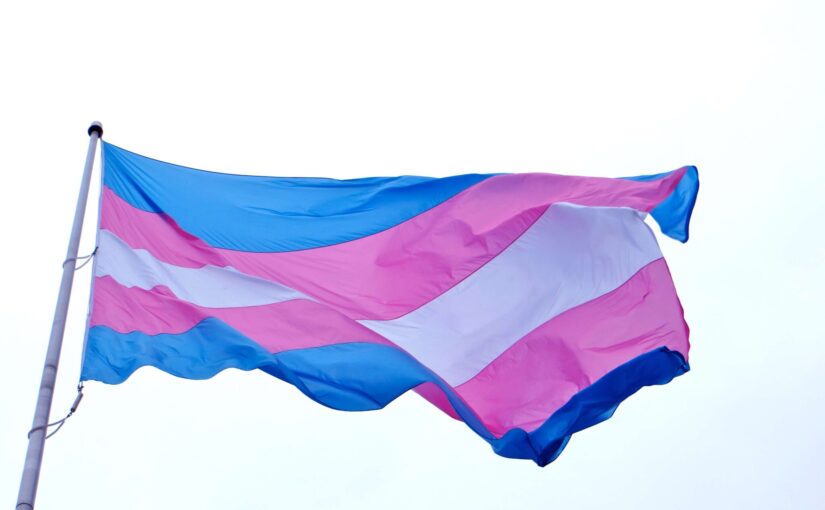
One of the reasons why I took the Women, Gender, and Sexuality Studies class was to learn more about transgender people. That being the case, for my research I chose to explore in-depth mental health issues that transgender people experience. Gender dysphoria, struggles of self-identifying, and hardships with explaining one’s state of mind are distressing on their own. As if it is not enough, our uneducated and more-often-than-not cruel society is full of discrimination, the stigma of gender minorities, verbal, physical, and sexual harassment, and other forms of negative attitudes towards transgender people, which makes the situation even more excruciating. Personal stories and statistical information that I have stumbled upon during the research have opened my eyes to the terrible occasions that many transgender people have to go through in their lives.

Final Project: Mental Health Issues in the Transgender Community

One of the reasons why I took the Women, Gender, and Sexuality Studies class was to learn more about transgender people. That being the case, for my research I chose to explore in-depth mental health issues that transgender people experience. Gender dysphoria¹, struggles of self-identifying, and hardships with explaining one’s state of mind are distressing on their own. As if it is not enough, our uneducated and more-often-than-not cruel society is full of discrimination, the stigma of gender minorities, verbal, physical, and sexual harassment, and other forms of negative attitudes towards transgender people, which makes the situation even more excruciating. Personal stories and statistical information that I have stumbled upon during the research have opened my eyes to the terrible occasions that many transgender people have to go through in their lives. Thus, according to the 2015 US Transgender Survey, “the majority of respondents who were out or perceived as transgender while in school (K–12) experienced some form of mistreatment, including being verbally harassed (54%), physically attacked (24%), and sexually assaulted (13%) because they were transgender” (2). Moreover, 17% left a school because of the amount of molestation. Additionally, nearly one-third (29%) of respondents were living in poverty, compared to 14% in the U.S. population, which may be explained by high unemployment rates due to bigotry-based rejection and dismissal. Further, forty percent (40%) of respondents have attempted suicide in their lifetime, nearly nine times the rate in the U.S. population (4.6%), and thirty-nine percent (39%) experienced serious psychological distress in the month before completing the survey, compared with only 5% of the U.S. population (3). This disturbing data indicates that transgender people experience not only bodily discomfort but severe psychological distress caused by discrimination, stigma, and negative attitudes among the public. 

Based on the idea of connection between the psychological distress experienced by transgender people and the discrimination towards them, I created this project. It was inspired by several things. While doing the research, I remembered a song by Arcade Fire, which goes like this:

”My body is a cage that keeps me

From dancing with the one I love

But my mind holds the key” 

I believe this song to be about the transgender experience. One interviewee, who shared their inner mind with Psychology Today, exclaimed: “…Suddenly I felt wrong. My face felt masculine but the rest of my body didn’t fit.” Another transgender individual said that they felt “…almost like I was pushing out on my own skin, trying to get out, or like an itch that I could never scratch…” Their bodies were the cages, but they used their minds to reach the balance. Another inspiration came to me from an ink painting by tatikoff that I accidentally found on tumblr. It depicts a person held in their body by ropes and serves as an illustration for the Arcade Fire song. Finally, I was inspired by one of Hannah Höch’s masterpieces, Cut with the Kitchen Knife, to be particular. Höch cut pieces of newspaper to form a work in the style of collage. Her message usually concerned contemporary public and political life. I think the medium of collage is the best to express my findings in an artwork. I put the thoughts expressed by real transgender people into the head of the person. The body represents a trap and a bait for various forms of mistreatment. Every word and phrase that I used are not coincidental, as they come from the sources in my bibliography. The goal of my project is to show that the cruelty of our society leads to devastating psychological consequences for transgender people. It is important to pay attention to these issues and find the ways in which society needs to work in order to establish a more inclusive environment. 


Gender dysphoria¹ can be “broadly defined as discomfort or distress that is caused by a discrepancy between a person’s gender identity and that person’s sex assigned at birth (and the associated gender role and/or primary and secondary sex characteristics)” (“Life satisfaction and mental health among transgender students” 1).

Presentations

By: Olivia Francis

Women that are politically involved experience violence almost every single day worldwide. Many are not aware of the severity of violence, and we must bring attention to this topic. While women have come such a long way historically, there is still a long way to go. No matter how many milestones that women in politics reach, there is always a considerable risk for violence against them. Women in politics receive death threats, continuous hate comments, and people have tried to assassinate women in politics just because they believe they do not belong. Many factors further affect a women’s job in politics, such as race, sexual orientation, gender, social class, the mass media, news, and history. These factors alone make it even more difficult for women to be politically inclined and voice their opinions. We must bring awareness to women in politics who experience violence because it needs to end. Women should not have to live in constant fear just because of their gender. 

Public Awareness Campaign