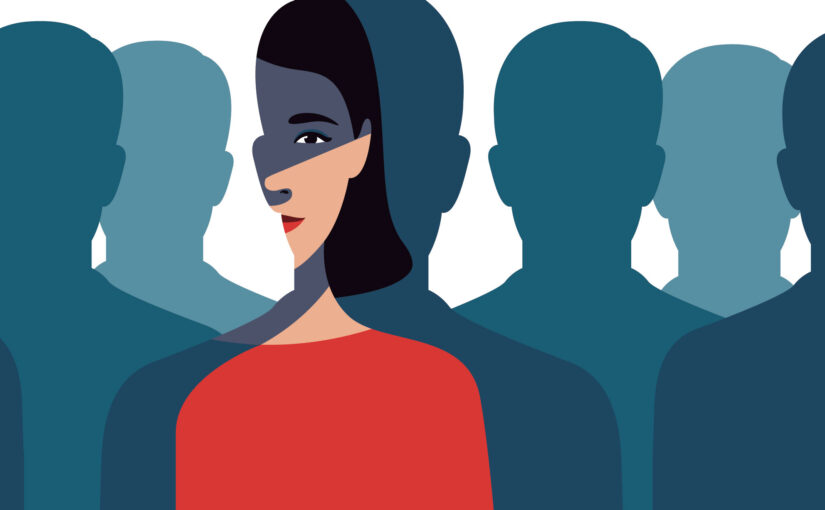
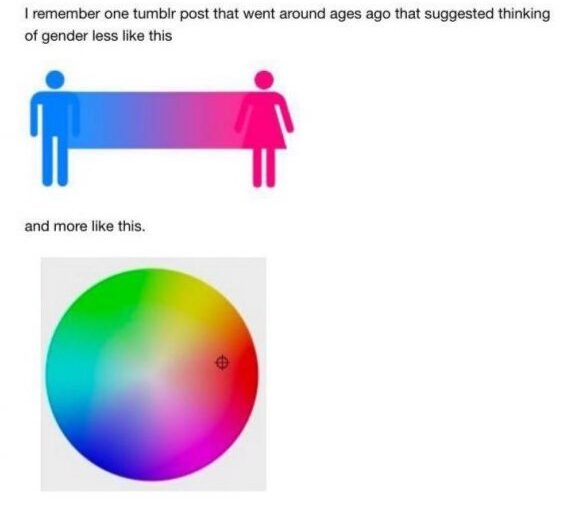
Gender has no one particular definition, but it is something that has been constructed across societies and through cultural definitions rather than pure biological ones. Importantly, sex and gender do have different meaning. Ender plays a significant role in how society is organized, and depends on geographically where you are located in the world. According to Chimamanda Ngozi Adichie, gender matters everywhere in the world. Men and Women experience the world differently, Gender colors the way we experience the world’. This explains and connects to my own personal experience.
I was raised in a society where the male role meant household head, bread maker, sole responsible for family financial matters and sole responsible decision maker for any such thing such as marriage. In one sense, this power dynamic can be constructed as ‘authoritarian’. This is how gender has been used as a tool to assign roles and responsibilities in household dynamics. I knew it this way until I finished my high school in Bangladesh back in 1987. Since I moved to this country there has been unimaginable and unprecedented perception changed from my thought and mind because culturally and socially are very different from where I came from which is in part of Southeast Asia.
There are a time back in the days ,in my birth place when I grew up have seen when a husband died in a South Asian household, the spouse would have to wear white clothes, specifically a saree and salwar, because it was a ritual that she has to grieve for 4 months, she has to take off her jewellery such as bangle, nose pins and make sure she is following social interaction within permissible immediate family members which is given permission in the religion. This form of grievance was particularly gendered and expected of women, but not of men. Men are seen as the head of the household where he manages and is seen as the decision maker because he is the one who is responsible for the financial matter of a household. Indeed, majority women are dependent on men due to barriers in accessing education, economic opportunity and financial insecurities which all make them vulnerable. On the other hand, men are not obligated with anything they are able to do after their wife’s death, no restriction such as women do all the rituals, but aren’t expected to grieve in such ways. It doesn’t apply to men with all these norms, customs and traditions. But time has changed in every part of the world .There is a change of policy and law which has been implemented and towards Millennials and Generation Z people’s attitudes have changed as well too, with less embrace and take up of these particular old norms or traditions.
Another example of how gender is constructed in Bangladesh, it makes it pretty clear that as much as society and generation changes in so many ways but people of its older citizens haven’t changed that much yet with certain norms. For example, women after 40s and 50s you won’t find not even one in a million, a woman obtaining their college education degree because it’s impossible to think in that particular society or time period someone pursuing higher education. It wasn’t the norm, it was seen as something only privileged elite individuals had access to. Gendered perceptions of what masculine and feminine were created around gender identities. Perceptions about men are seen as strong and masculine. On the other hand, women are seen as weak and passive, not worth the time and money to search for their dreams because all of this is still in place in today’s society in Bangladesh. Women and those who are feminine are devalued and dehumanized. I haven’t seen when I grew up any Rickshawala, train or bus driver, taxi driver as women as well as now because of the stereotype of attitude still existing in that society, that these career callings were not possible, but also creating the economic power for women.
Gender roles and expectations are not the only way they interact with how people live and experience and navigate this world. The question of defining gender means speaking about gender in relation to sex. In my perspectives gender and sex are two diffrent definitions. When I hear the word sex it comes to my mind a biological context. On the other hand, when I hear the word gender it comes to my mind is someone male or female. Based on the lived experience of people in the west, men have held power and are often highlighted in history for being the ones who have made advancements in industries such as politics, science and entrepreneurship. It’s been in the past history all presidents, scientists, commander-in-chief, inventor,construction worker etc. For example it took over 240 plus years since independence in 1776 to elect a Vice President in Kamala Harris has been the first woman who got elected as vice president in American history. And yet globally we still see injustice happening for girls education as demonstrated by Malala Yousefazai story, who was a normal 10 years girl who wants to attend school to get the basic education but she wouldn’t be able to get the basic right because of religious fundamentalism.
Gender is more than just a difference of biological, social, cultural differences. It is how we perceive ideas and thoughts and filter the world around us. For most of modernity, gender has reinforced patriarchy and allowed for huge inequities to take place, including genital mutilation, education access, wage disparities, child marriage, domestic and gender-based violence, and so much more. Why are these issues so pertinent around the world? Even though women are holding high positions of power in South and Southeast Asia, wage and gender inequality continues to exist in these spaces. And yet, Gender is no longer going to be seen as something that defines somebody in the 21st century. Despite all stereotype attitudes that still exist in society women going forward, which we never seen before such as in Pakistan, where the Pakistani Air Force has its first combat-ready female fighter who is Ayesha Farooq is the one of 19 female pilots in the force. Or in Kalpana Chawla, the first Indian woman who reached in space. Or In Saudi Arabia where Nora bint Abdullah al -Fayez, a US educated former teacher, was appointed deputy education minister in charge of a new department of female students. Today in Saudi Arab women are allowed to drive which is a significant breakthrough for women achievements. What is Gender? It is something that still organizes society, but should not determine who or what a person can become. This all changes are happening because people are focusing on abilities instead of gender!