Posts

Post 3 : Gender, Identity, and intersectionaliy

I believe that whether spiritually, cognitively, culturally, aspects of personality, or your gender identity, you are the only one that really knows who you are. Nobody can look at you, or even talk to you for hours, and know exactly who you are. When I think about how I identify myself and what defines me, I think about these things :

  • I am a woman
  • I am a kind person
  • I am a psychology major
  • I am a horror movie fan
  • I am Puerto Rican
  • I am heteroesexual

There is not much more I can think of, but these are the first few things that pop up into my head when thinking about myself, or what I can say about “identity”. when I think about identity, I think about who I am as person, how I identify gender-wise, sexual orientation, and my ethnicity. I can say these things about myself because I know myself. When people look at you, they will assume some of these things, but can’t possibly know unless they ask. This is how I think people identify me.

  • White (non-hispanic)
  • Female
  • Curly hair
  • Girly girl
  • (assumed to be heterosexual by many but not sure why they think that by just looking at me)
  • Shy

The only thing that others have is their observations. They can see that I am light skinned so they don’t assume that I am actually hispanic. They can see my long hair and body shape and know that I am a female. By the way that I dress, they can assume that I am more girly than tombboy because I am not wearing clothes they associate with tombboys like flannel and baggy pants. Because they see me as a girly girl, they may also automatically believe that I am straight because lesbians look “more like boys”, which isn’t the case all of the time. The categories that society has made that labels people based on their physical appearence consists of stereotypical norms and false assumptions. The people that Identify you are only able to comment on what they can see, without considering alternatives because they have been taught what characteristics goes into specific categories, like what straight girls and lesbians look like or what hispanic and white people look like. Some people just believe that what they see is the truth, and unfortunately being a certain gender or having a certain ethnicity can cause unwanted assumptions and discrimination. The way people will identify you is going to be different from who you really are unless they ask, or that person is someone very close to you. But even before someone gets to know you, they will have assumptions about you in the beginning. We have to bring awareness to this issue and reprogram their brains without these categories and norms.
Post # 3: Gender, Identity, and Intersectionality

I feel that identity is something that is only temporary for each person. I continue to struggle with my identity because I consistently realize that there is more to it than before. At times it is influenced by others, but it is most of the time just me critiquing myself. I like to evaluate myself from time to time, unfortunately not in a positive way. But the more I do this, the more I find things that I feel are part of my identity.

As time passes on, I slowly notice small things that interest me or are starting to intrigue me more. I usually use these things to determine what type of identity I have. I believe that someone’s identity consists of their interest and personality. In today’s society, people tend to judge others and themselves based on popular opinions and standards. Although we would like to say that we don’t let other’s words affect us, we do it more often than we should. Sometimes our identity is based on what we hear about ourselves from others; it determines our reputation hence giving us a sort of identity. Identity, in reality, is a very complicated thing that is made by the opinions of others and your own.

Gender Identity/ Our Own Niche

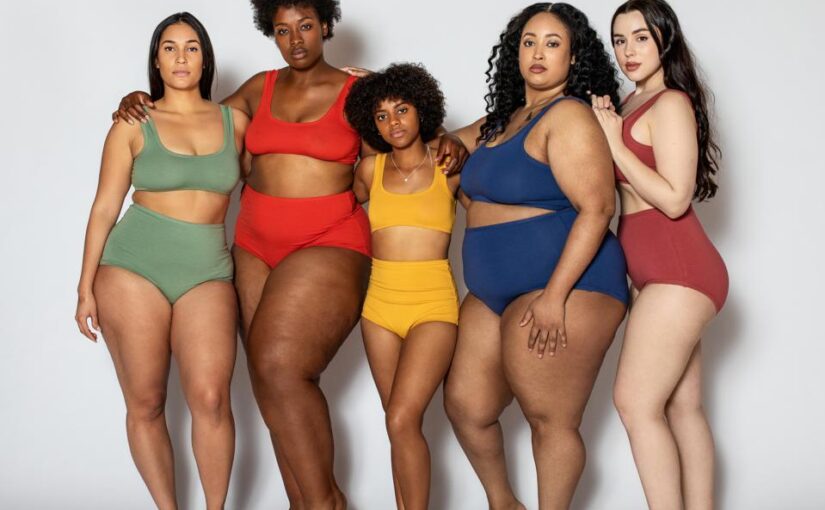
When we are born, we are given our identity, and it’s not until we can form ideas and opinions about ourselves that we get to choose our identity. Some ways in which our identity is determined for us is through society is through gender. We are under the impression that babies can identify as boys or girls and only a boy or a girl. But there are over 100 different kinds of gender now. We always identify girls with pink colors and boys with blue colors. This is just one example of how society has dictated gender roles to us has chosen identity for us. We see it with clothing, games, toys, and even positions we take on as adults. We have normalized single fathers and take on mother roles like cooking and cleaning and raising children. In today’s 21st century, it seems like society as one whole dictates the aspects of gender roles and what is “ok” or “acceptable.” Identities or attributes/behaviors seem more managed or directed by society. We have been able to control what is widely accepted in characteristics and styles by using social media as a “judging platform.” Social media has become either a positive space or a very negative one. I want to throw in an example of this and I feel that as if I would talk more to my female (she, her, hers) peers. Tik Tok has created this “trend” of new body positivity because recently women were being body shamed. This trend starts in many places but more popularly from a young woman named Lizzy Khang who shared a video of herself dancing with her belly out. Empowering young girls it’s okay to have a tummy !! Soon after she posted this “Tik Tok” 60 more million tiktokers followed. I think it’s time we accept all because we don’t have any room for hate and separation. I learned it’s easy to walk around with kindness and acceptance than disdain and disapproval. But, as our professor has easily reminded me; I am a daughter, a sister, and a best friend. I am a girlfriend a partner and a soulmate. There is much more to our identities than physical things and keeping those in mind will keep US alive.

Leaving this to think about :

I believe we are taught at a young age who to love and hate. We are a product of our parent’s views on the world. Sometimes children rebel against those views as they get older, finding their niche in the world. This can be a good thing or a bad one but isn’t that what we would encourage our children to do ? Find their place in the world.

Category is …..Gender, Identity, intersectionality

When we are born the doctor looks at our sex and say this looks like boy / girl, then our parents look at us and say well that looks like boy/girl. So, then society tell us if we are boy or girl. For many that intersection works for them. For me they did not get it quiet right. Walking through this world has always felt like wearing a really bad Halloween costume. Like the really bad witch costume that you would get when you were eight years old and you parents forgot to get you a costume, but wearing that costume allowed you to be in places of real witches. It has always been hard for me to figure out how to navigate this world as who I really am because of the way society has told me I needed to act to make it through the world unnoticed. As I have gotten older, I have learned how to expresses who I truly am through clothing and makeup. I have grown a family who accepts me for who I am and not who they were told I was. Growing up we are always told what to do by society “boys can’t like the color pink” or “girl can’t play “insert sport” because that’s for boys “or this one “boy can’t play with doll; dolls are for girls”. Society forces us to fit this mold of the “ideal man “or “ideal woman”. Those of us who don’t fit these “molds “are subject to torment by other because we just want to express who we are. We are told every day that we are meant to be man because we look like a man or we are a woman because we look like a woman according to societal standers, but our outside costume doesn’t fit our inside being. For me I have learned how to decorate my costume with clothing, nail polish and make up to help me feel more like myself. I remember when I was younger, I had always gravitated to dolls and as a child I was told by my school friends that boys couldn’t play with dolls because dolls were for girls. I remember thinking that that can’t be true because

I was never told that as a kid but that same day I went home and turned on the tv to my favorite show Pokémon and right there on that tv I saw an ad for this Barbie doll, and I notice that only girls were playing with dolls. There were no boys in sight and I then I saw a commercial for race cars and I only saw boys playing with race cars. That was one of the first time I could remember seeing those “ideal man” and “ideal woman” molds. From there on out I watch how societal expectation of gender  told me what I wore, what colors I had to like and how I had to handle my emotions.   

Post 3 – Identity

Some of our identity is more flexible than others.

In a lot of ways, we don’t get to choose your identity. For instance, we don’t choose where we were born, where our parents decided to move us, who our parents were, who are further relatives are, what trauma our family members went through and how much therapy they have received, our financial situations, our genetics, the culture experiences that we have, and the message we receive from society.

I don’t see a single person nor a group of people that can be blamed for our identity. I think a lot of it is situational and coincidental or perhaps a work of a greater being and the universe as whole.

Weekly Roundup Feb 23 & Mar 2

Hello everyone!

First off, I apologize for the strangeness from last week–I had an urgent medical emergency that I had to get looked at. Tl;dr is that I am fine (so far, and I hope I continue to be). Here’s what we have going on this week:

  • Work on your identity charts and the reading for Blog Post 3.
  • The week of Mar 2/4 (this week), I would still like to have conferences with you. Please sign up here. You can sign up for any time that fits your schedule, and if you don’t see anything there that works for you, please email me and we will work out an alternate time (gwendolyn.shaw [at] brooklyn.cuny.edu)
  • For class next week (Mar 9) — keep reading up on queer identity and theory, as well as power and social coercion. We will discuss more in class.

See you at your conference!

Gwen

Gender, Identity, and Intersectionality

Identity is an essential part in every person’s life, and we all go through a time wondering “who am I?” However, I believe there are several ways a person can identify as. We do this everyday through the clothes we wear, the people we surround ourselves with, your sexuality, your religion, etc. Identity is an aspect that we work on every single day, we all constantly want to be the best and most defined versions of ourselves. However, identity is chosen for us when we’re babies and as soon as we are born, we’re told “male” or “female.” From these labels being put on us, society pushes norms onto us, with ideas of what “feminine” is and what being considered “masculine” is. A trend on who gets to decide aspects of identity a lot of the time is definitely social media. Social media surrounds us everywhere and the things we see make us want to change ourselves for the better or worse. Some behaviors I see managed or directed would once again be to fit into the “assigned” genders. From a young age, my parents would scold me when I did something that wasn’t “girly” or seemed unfitting for a “girl” to do. However, deep down everyone knows who they are and who they want to be. These norms don’t stop a person from knowing who they are, but it does put pressure on them to hide it sometimes depending on who’s around.

Post 3: My identity by: Ashley Fung 3/2/2021

I get to choose my identity the more I learn about my identity; and the further I discover who I am as a person. When I was younger I had less control of choosing how I express my identity. I remember growing up, I felt like my parents, peers, and family members had a lot of control of limiting my speech and expression in order to make me fit into this societal norm. However, now that I am older I feel like I have been able to have control over my own expression of my identity; I love who I love, cut my hair however long or short I desire, and wear whatever clothes that makes me feel comfortable. In addition, I can choose my identity more now because our society itself is also learning more and becoming more accepting. For example, society is becoming more inclusive, now some surveys that ask for your gender offer more options such as non-binary, prefer not to specify, etc. Although, now I have more control of my gender, there were some ways where my gender was chosen for me.  For instance, my parents stated they knew that I was going to be deemed as a female because of my reproductive system type from my ultrasound. I feel like ultrasounds and gender reveal parties are limitations of gender expression because it does not give the baby a choice to choose this part of their identity themselves. The world has been in favor of cisgendered heterosexual beings. With that being said, in certain scenarios and environments, I find it hard to express all of my identity because even though the world is becoming more evolved and accepting; there are still people who are judgemental, sexist and homophobic. But, the people who are closest to me and most important to me, are the ones who get to see the entirety of my identity. 

Gender, Identity, and Intersectionality

Identity is something we are given at birth. For instance, gender is something parents find out before the birth of a child. There are gender reveal parties where they determine the gender of the child though gender and sexuality are not the same things. For a long time, the “norm” is to associate sexuality with a child as well, and usually, we assume everyone is heterosexual. Society also reinforces this idea by associated sex and gender together though they aren’t. Over time as people grow older, they are able to determine whether or not that is the mold they want to fit into or if they even fit in it alltogether. For instance, being part of the LBBTQIA+ community.

Social media and society all together play a role into identity. If we do not see people like us represented in mainstream media we question if there is something wrong with us or what we can do to be more like the people represented on mainstream media and social media. It reinforces certain standards such as beauty standards. From the way we think, look, dress, etc. Many people have gone through phases where they may alter themselves to look a certain way or act in a certain way but that usually may have to do with what is on media. That is something we have control over as it is a form of expression.

Gender, Identity, and Intersectionality

When a mother finds out the sex of a child, the creation of identity begins. We’re given a name, we’re assigned a race, and we’re even given expectations on how we would grow to behave depending on our gender. We don’t get to choose our identities until we mature, and then we strip ourselves of previous traits that society forced upon us. However, some people cannot simply disregard traits that are placed on us even if they don’t represent us. Unfortunately, stereotypes are constantly perpetuated throughout society and the constant over-generalizing of certain groups of people can lead to the fixed perspectives of these people. Most times, these stereotypes can be harmful, causing those who aren’t familiar with cultures or races other than their own to force their prejudices on those who don’t fit that mold. 

I don’t think a particular group of people chooses your identity, but I do think everyone has a perceived identity. You can’t help how others view you which makes me sympathize more with those who live an “unconventional” lifestyle and those who are being coerced into adapting a lifestyle that simply doesn’t coincide with how they feel or view themselves. That’s why I think it’s important to figure out who you are and who you want to be. You can make the changes necessary to fit how you identify yourself as, whether it be changing your clothes, your hair or even your demeanor. Also, be mindful that everyone won’t see you as you’d like but that’s okay. I think it’s more important to live in your own truth and not the truth of others.