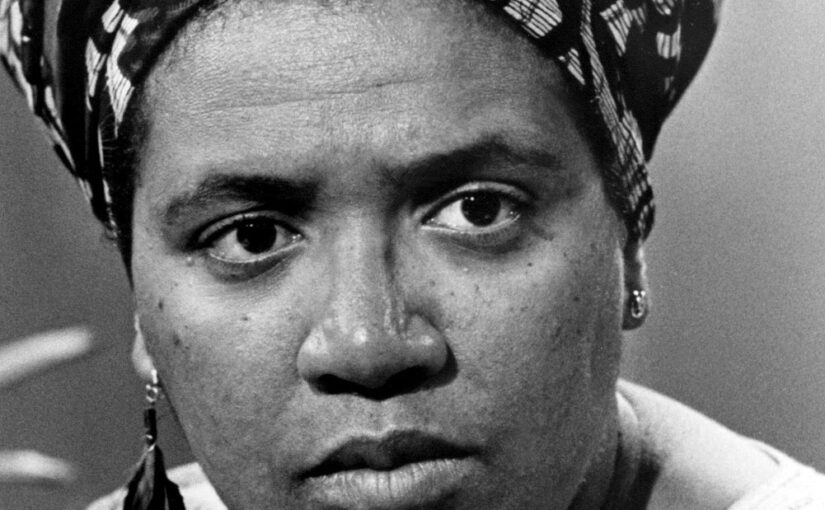
I agree with Audre Lorde’s essay. All women are different in unique ways like culture, physical traits, and much more but we should not be treated differently depending on our sexuality or skin color. The major point of this essay is that we cannot solve problems of oppression working with the tools of a system of oppression. Scholars cannot rely on the tools of academia to combat racism. Yes, we’re different, but we should not completely separate ours because one may believe their struggle is more important than another. We need to understand and embrace our differences.
Author: Sheena Naser
Post #8: Annotated Bibliography
- Dr. Awan, Zamurrad. “Pakistani Women in America,” The Nation. 15 November, 2017. N.p. https://nation.com.pk/15-Nov-2017/pakistani-woman-in-america
- I used this source because it talks about the vast differences between America and Pakistan. It talked about the first hand experience the author had when he was in Pakistan. As a man he was able to spot many gender imbalances and wrote the patriarchal society in Pakistan.
- “Gender Equality and Female Empowerment,” USAid. 10 February, 2021. N.p. https://www.usaid.gov/pakistan/cross-cutting-themes-good-governance-and-gender-equity
- I used this source because it talked about female empowerment and equality for both America and Pakistan. I really liked this article because it talked about education, health, women in agriculture, etc. It had many different aspects that showed differences for women and men; which is why I used this source.
- Mahar, Mehwish. “Reasons Behind Women Inequality in Pakistan,” Modern Diplomacy. 31 March, 2020. N.p. https://moderndiplomacy.eu/2020/03/31/reasons-behind-women-inequality-in-pakistan/
- I used this source because it talked about why there is inequality for women in Pakistan. It gave background knowledge which was very helpful for my project.
Post 14: Final Project
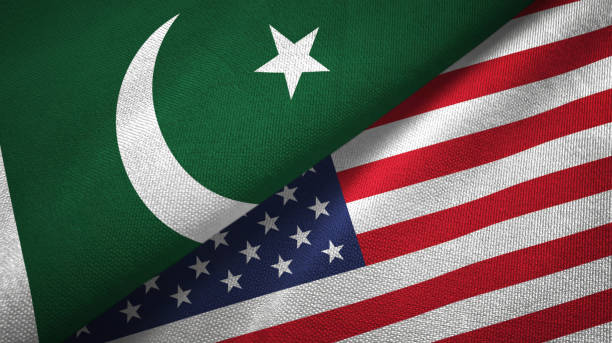
My final project will be presented as a syllabus. I decided to go for this option so I can show how I would teach the comparison between gender imbalances in America (1st world country) and Pakistan (3rd world country).
Below I have uploaded a pdf for the syllabus I created. Thanks for checking it out!

Post #6: Bibliography
- Dr. Awan, Zamurrad. “Pakistani Women in America,” The Nation. 15 November, 2017. N.p. https://nation.com.pk/15-Nov-2017/pakistani-woman-in-america
- This source is reliable and credible by academic standards because it is a scholarly article published on trusted national news site.
- “Gender Equality and Female Empowerment,” USAid. 10 February, 2021. N.p. https://www.usaid.gov/pakistan/cross-cutting-themes-good-governance-and-gender-equity
- This source is reliable and credible by academic standards because this website is written by USAID. Their corporation leads international development and humanitarian efforts to save lives, reduce poverty, strengthen democratic governance and help people progress beyond assistance.
- Mahar, Mehwish. “Reasons Behind Women Inequality in Pakistan,” Modern Diplomacy. 31 March, 2020. N.p. https://moderndiplomacy.eu/2020/03/31/reasons-behind-women-inequality-in-pakistan/
- This source is reliable and credible by academic standards because Modern Diplomacy is an online news webpage which gives updated information about news around the world.
Post #5: Independent Project Work Plan
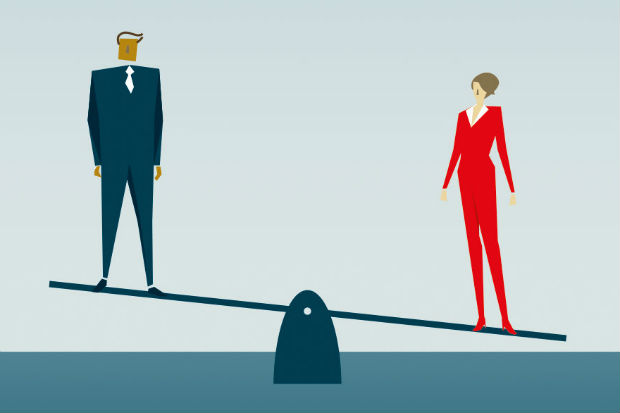
For my project I would like to compare gender imbalances in America and Pakistan. There is a vast difference between Pakistani and American societies in nearly all walks of life, yet both countries are nearly similar when it comes to equal rights being given to both women and men. In order to better understand this topic I would need to:
- Find scholarly articles, news, any info about gender imbalances in both countries
- Understand how they both countries compare and contrast with each other
- Question: how is a “first world” country and “third world” country so different yet similar?
- Find articles to see if changes have been made from the beginning to now, if yes then how drastically did it change
- Why are we still seeing inequality around the world today?
Post #4: Intersectional Analysis
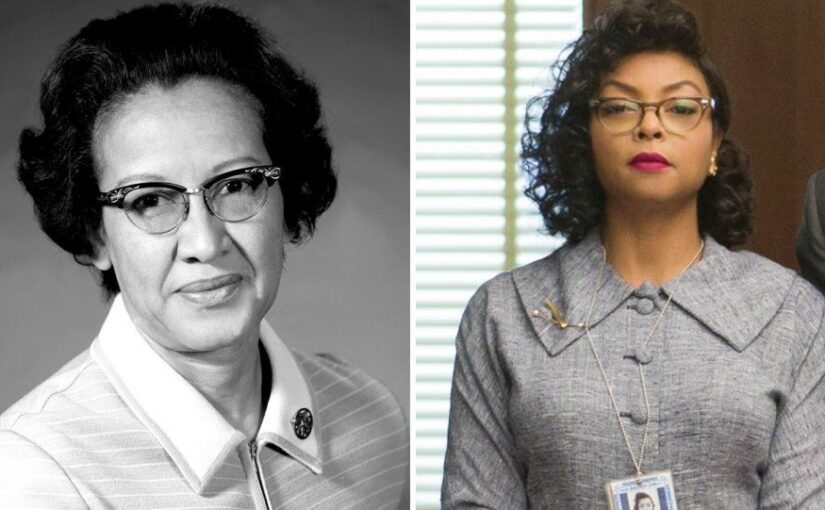
From the movie, Hidden Figures, one character stood out to me the most. Her name was Katherine Johnson. This movie is based off of a true story which made the entire movie even more interesting. Katherine Johnson is a passionate, outspoken Black mathematician who works in the Flight Research Division at the Langley Research Center. She had joined the National Advisory Committee for Aeronautics (NACA) as a “computer” under her friend, Dorothy Vaughan. Upon joining the segregated NACA workforce in 1953, she refuses to use the colored bathrooms or to allow prejudice to make her feel small. Though she comes up against racism more than once at the NACA, she maintains her bright personality and manages to charm everyone she comes into contact with; without losing sight of her dedication to her work and her community. One of my personal favorite scenes in the movie was when the astronaut, John Glen, asked Katherine to double check the numbers for his flight trajectory and landing. This was a key moment in the film because John didn’t trust the calculations performed by NASA’s new IBM computers, but trusted Katherine enough to provide the correct numbers; and she turned out to be successful. She distinguishes herself first as a computer for the Flight Research Team and later as an aerospace technologist. She became the first Black woman to publish a research paper on space flight. Katherine was also a part of the Space Task Group and is key to the success of Project Apollo’s first lunar landing in 1969.
Picture: The woman on the left is the real Katherine Gobble Johnson and the woman on the right is Taraji P. Henson who played Katherine in the movie Hidden Figures.

Post #3: Gender, Identity, and Intersectionality
Identity has a big impact on me because of the culture that I have grown up in. I am an American-born Pakistani girl. Because of this, I wasn’t necessarily raised with the typical Pakistani standards. Pakistani culture is greatly patriarchal. There are many old and conservative traditions of women having a subservient and subordinate role. Decisions for female individuals are made by men in her family, especially in under-developed and distant regions. With that being said, I am seen as an independent woman in my culture. I am focusing on my own career and getting an education, which is highly uncommon in a traditional Pakistani household. I am not following the traditional concept of finding a man to marry and to be dependent on him to fulfill my financial needs when married. Pakistani culture is surrounded with having an identity that can be seen by others and not judged upon. Therefore, it is very important for girls to be respectful so our identity does not get “ruined” or affect our families in any way. This is so there could not be any obstacle when looking to get married. Many find these customs to be strict, but these customs is what shaped me to be the person I am today.
Post #2: What Is Gender?
If you google “what is gender” you will get a response like gender being the range of characteristics that differentiates between femininity and masculinity. But is that really the answer to that question? Social media shows that gender is not only what you see in front of you, the sex you were born with, but also how you think, feel act and react in some situations. It is how you were raised to be and how you shaped yourself to become as you grew up. It is a fascinating blend of biological, psychological, and sociological features. Though there are both pros and cons to being associated with either genders. If you’re a man you will be seen and assumed as a “leader” especially in corporations; while females are “followers” and would be seen as the role of an “assistant” in the workplace. Genders also have a “specific” roll in households. Man works while the woman stays at home and takes care of the kids, cooks, cleans, etc. Though as we move forward in time, these roles are either being switched or both genders head to work. These stereotypes create obstacles for women which makes it harder for them to obtain a job unlike a man who is expected to go out and be the income for the house.

Post #1: How To Write A Post
Posting on this site is quite easy, here are a few steps that can help you out if needed:
- Log onto the CUNY commons website
- Click on you designated class time
- Click assignments
- Click on the post that you wish to work on
- There should be a “+” symbol on the top of your page, click that
- Write a title and description which corresponds to your post
- Add a category to your post
- Publish!
I hope this helped 🙂

