- On the Commons webpage, click on your specified class time on the left-hand side of the screen
- Click on the “Assignments” tab
- Read the assignment instructions
- At the top of the page, on the black banner, select “+ New”
- Click “Post” and follow the instructions
- Complete the assignment
- Choose to receive notifications for replies
- Click “Publish”
Posts
What Is Gender
Gender is a social construct that is meant to describe characteristics of the two sexes (male and female). These traits are masculinity for the male sex and feminity for the female sex. These terms include norms, behaviors, and roles associated with being a woman, man, girl, or boy, as well as relationships with each other. The ideas promoted by these terms are that boys and men must be physically strong and not show emotion and behave aggressively and girls and women should behave politely and be fragile and even weak. These societal roles are not anything but ideas but have real-world applications. These terms led women to be seen as weak in many aspects of life, intellectually, physically, and even emotionally. As a result, a multitude of economic and financial opportunities was denied to women throughout history. Until 1920 women were not allowed to vote in America and that was in a large part to women finally being allowed in the workforce as a result of the men being away fighting in World War I. The fact that it took so long for women to be allowed to be self-reliant and dependent is a perfect portrayal of the fact that the existing gender roles which were social constructs had very real-world effects and in many ways continue to do so. However, with the birth of the modern feminism movement, it is possible that in the not-so-distant future, despite whatever was the historical stereotype for the two sexes was, women will be free and able to achieve whatever goals that they set for themselves regardless of existing gender roles. Gender roles should be fluid as are all social constructs, meaning that over time they should be subject to change as the society people live in changes. In this supposedly “modern” time it should not be a big deal for the vice President of the United States to be a woman and yet Kamala Harris is the first female VP in the nation’s history, stemming 240 years.
What is Gender ?
By: Shai Hutchinson
The idea of “gender’ is in and of itself an extremely subjective idea. When we first think of gender the first thought that comes to our mind is male or female, but is it really that simple? Gender is basically a fabrication that society makes to categorize sex roles. Sex is determined before you are even born, as early as fourteen weeks being a fetus inside your mother’s uterus. The norm of society is that depending on what your sex is, you must be born into that category, therefore already having a predetermined role that you must portray in your life. Society has constructed gender to be such a significant factor of a person’s identification, where gender reveal parties have even become bigger than baby showers. Even at baby showers and after we are born, we start being identified with those categories that pre-existed us- pink for girls and blue for boys. Most parents dress their children up in these colors, building the social foundation of theoretical gender roles that have been already chosen for us. These roles are how society manages gender, while setting up an expectation of how we are supposed to act according to which of these categories that we have been placed in. In society, if you are a woman then you are supposed to be more private and domestic, emotional, caring, nurturing and submissive and if you are a man, you are expected to be the main provider of your family, while being dominant, strong, rational and vocal.
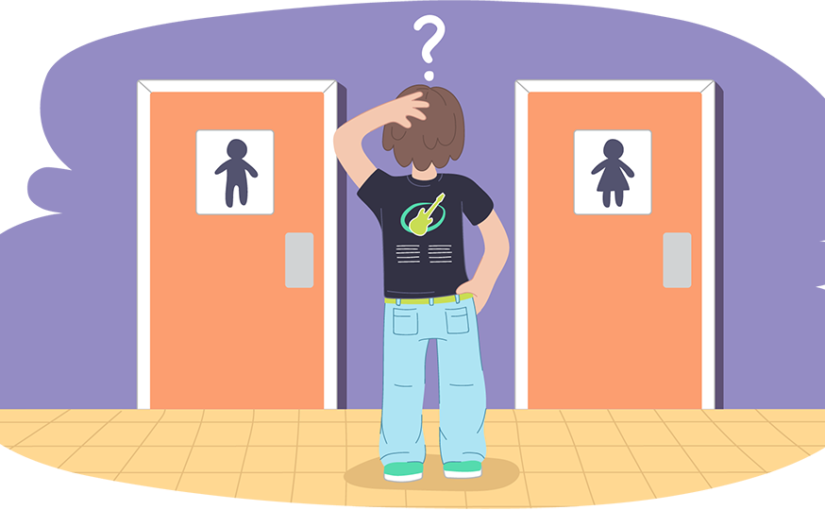
Society continues reinforcing gender roles with all the rules of separation that we face in everyday life, such as using separate restrooms designated for male or female and having children line up separately in school according to their assigned gender. If we ask ourselves why we face all these separations, we can see that in a way it can relate to power and privilege. Society puts us in these categories as a way to identify which is the stronger and more powerful category, while legitimizing the more dominant category as behind the heads of our society. As we all know, this “more dominant” category tends to be men. Because men are viewed as presiding women, they are perceived to be the smarter gender, normally get better jobs and opportunities, and are usually generally favored in many aspects of life. This is a result of the fact that most of the leaders in societies tend to be men. We have never had a female president and majority of political leaders are male, in a way this encourages it to be a world of men made by men. These men in power tend to be intimidated or fearful of seeing a woman rise up or surpass their level of power, especially since women are identified as being the less powerful individuals of these two categories. Seeing women take these roles would jeopardize the idea of men being the more dominant individuals. Meanwhile, men who act less dominant and powerful than they are “supposed to” are looked down upon in many societies.
These gender roles are created for us preceding our birth, but is it really that simple? Now we live in a society that contain reverse gender roles, where many women are being the primary providers for their family, while playing the role as the dominant and strong individual in a family, while in some cases, men can even be the domestic and emotional individual of a family. As the years go by and the thoughts and beliefs of society continue enhancing, we begin to see more changes in how gender is defined and depicted. Now we live in a time where gender is entirely subjective and has no limit. Who we personally identify as does not necessarily have to be the gender of the same sex in which we were born into. We all get “assigned” a gender at birth but as we grow to be our own individuals, we begin to make our own identifications. Some people identify and being the opposite gender in which they are assigned or can even identify as being both genders. Gender is not just black and white and should not be so strictly categorized, as we all have our own personal sense of what gender we should express.
What is Gender?
Depending on the circumstance, gender can be a renowned amounts of characteristics such as biological sex, gender identity and gender in social behaviors and interactions. In American society, gender is often culturally attached to the roles of men and women. For instance, the role of gender in a relationship is based on masculine and feminine qualities. The nuclear family is a great example. Another example society reinforces gender is through clothing. When department stores became popular in the United States, companies used gender in order to market to parents as well as children. They separated clothing by gender. During the 1940s, the color pink was associated with young girls while the color boy was associated with young boys. It is interesting to note that pink was considered a masculine color in the 1920s.
Gender relates to power and privilege because women have been viewed as inferiors to men for centuries in various cultures. In some cultures, men are allowed to do as they please, while women often need a guardian in order to perform basic tasks such as going to the grocery store. The pure freedom that comes with being male is one of the most renowned privileges they have. There are double standards that are evident throughout cultures regarding men and women. Likewise, for those who do not want to fit into gender roles are often ridiculed because mainstream society is compelled to put them in a box. Those who follow mainstream societal expectations benefit from this because they are not ridiculed for them submitting to conventional standards. Likewise, many countries have patriarchal aspects such as India. Thus, men benefit from these institutions that reestablish gender in society. Those part of mainstream society have often decided which gender is legitimate and this is because they hold more power than those outside of the culturally norms.
Gender is a social construct that has morphed into various means. There can be endless amounts of gender because, ultimately, it is what an individual identifies with.
What is gender?
Gender is a word that describes male and female, and it is specific to differentiate different biological characteristics of male or female. We see it everywhere, in our everyday life, in films, and it is used academically, etc. In our society, the notion that men are breadwinners, and women are housekeepers are very common. Moreover, women are often shaped as weak and passive, seeking the protection of men, on the other side, men are often shaped as strong, brave, and intelligent.
Gender relates to power and privilege is shown in many aspects of society, men often have more privilege than women. They usually have a higher position in a company, and this phenomenon is rooted back in the time when there was no female doctor. And even Now, Kamala Devi Harris is the first female vice president, which is a good sign that indicates female’s status in society is getting higher. under the Patriarchal society, I think that men decide which gender is legitimate.
For the question “How many genders might there be?” I have asked my family and friends, my older family member said “of course there are two genders, male and female”. But, my sisters and my friends who are a similar age as me, all said there are three genders, male, female, and the third gender. I prefer my friends’ and sisters’ answers. To my knowledge, there are people with XX chromosomes, XY chromosomes, and XXY chromosomes. However, we might be wrong, not because we do not have enough knowledge then we can be denied there can be more genders exist.

What is Gender?
For a long time, I though gender only as cis genders and strictly defined by our sex. Now, I realize that it is a wide spectrum that more closely relates to our concept of identity and self, rather than our sex/reproductive functions. Nonetheless, I don’t really understand what gender is or where we can draw the line and say “there’s x number of genders”.
I do understand, however, that gender is everywhere. It’s constantly reinforced. From the moment we are born, we are expected to behave and are treated with our assumed gender. A child is given a name, thrown ceremonies (baby showers, circumcision, etc), and raised differently because of our assumed gender. Even as we grow older and become independent, it is impossible to get away from these restrictive gender categories. It could be something as simple as everyday language (e.g. pronouns) or something much bigger like normalized disadvantages (e.g. wage gap, discrimination, etc) gender seeps in.
There are a lot of ways both sexes suffer. Feminism is the movement and political ideology for the equality of sexes. There are a lot of ways women are discriminated against, we know from the data, that women are often under paid, under promoted, and are sparse in positions of official power such as ceo, legislators, and so on. Furthermore, women are often expected to be passive, submissive, and sometimes even dumb. If we look at the english language alone, I can think of over dozen female-based swears, and less than 5-male based insults/curses. Women are more likely to be a victim to domestic violence. Girls around the world are married off, pimped, and held back from education.
That isn’t to say that men don’t have important issues. In fact, men in US have higher rates of suicide, more men are imprisoned, and parents aren’t as tender to growing boys in America. There are harmful stereotypes and unrealistic standards that affect the mental well being of men in America. The concept of masculinity and homophobia create real challenges for teens as they develop into manhood.
We don’t have to choose the worse of these two broad sets of issues because they all ultimately come from the strict definition of gender and the way we enforce it in society.
I’m not really sure who benefits from these but I believe they’re influenced by businesses. Businesses who wanted more says were the ones who started associating pink with girls and blue with boys. We know today, that this association is still strong and well. The same can be said for commercials like axe and others that perpetuate a certain idea of manhood. The last example I’ll give is that the razor industry wanted to sell more razors so they created ads that created the unrealistic beauty standard that women must be like hairless cats when they’re going anywhere respectable.
What is Gender?
Gender refers to socially constructed characteristics differentiated in women and men. Gender is not biological sex. It refers to our roles, societal norms and behaviors in society and includes our relationships with each other. They are different in different societies and as soon as a child is born, gender roles are implemented. Such as women who are not allowed to go to school in certain countries and are seen as stay at home mothers who cook and clean for the man and the children. While in other countries men are the only ones drafted to the military and are seen as the breadwinners of the family.
There are inequalities when it comes to gender and power. Women are seen as less influential in the workplace so their ideas would not be seen or heard like a man would. For example, men in politics making decisions about what a woman should do with her body. Also a simple thing like safely walking to and from, men have more privilege when it comes to feeling safe on the streets. I guess it is the patriarchal dominance society was built on and the men seeking the urge to be superior and women constantly being seen as inferior. Women were kept silent all these years but lately, we have witnessed more and more powerful women rise up and that has shifted the narrative of women in society who are able to have their voice finally heard. Whoever seeks to have their voice heard the loudest will be the only one that can determine their legitimacy in society.
There might be infinite genders and a person should be able to express themselves however they want in society.
how to make a post
- create a cuny commons account using this link: https://commons.gc.cuny.edu/
- navigate to appropriate class website, in this case, we are using this one:
3. follow/ join the site to access all the features

4. on the sidebar, go to assignments and see what needs to be completed. once done, on the toolbar at the top hover over “+new” and click post.
5. complete your post and make sure you have properly categorized your work and set a featured image, and then publish immediately

Post 2: What is gender?
Gender is a socially constructed term to originally referred to two: male and female. We see gender and the importance of it when we apply for a job, when we fill out a medical survey, during the conversation with other people. The society manages it in many different ways, for example before when you registered for social media you could choose only 2 genders, now these are not the only choices we have.
Gender relates to power and privilege in forms such as wage gaps, women not being allowed to get an education in the 20th century, men having higher positions. I think there is a huge difference in problems different genders face, for example, men are not allowed to be seen showing emotions and they have to be strong, women are seen as inferiors who are not able to be in high positions, gender-neutral can be seen as unordinary by other people. I think some genders superior and inferior because that is how communities and humanity overall works. It is impossible for everyone to be equal and there will always be order in how things work. It is not a surprise that most country leaders are men. So far only 29 countries have females serving as elected heads of government or state. It is not a coincidence that it is such a low number. It is obvious that men are more encouraged and allowed to be in higher positions than women.
I think there may be an infinite number of genders because right now there is no “norm” to fit into two genders. Anyone can say “hey, I am not a male, I decide to be a pineapple” and no one can say anything because it is their choice. Sex and gender are different, and people need to know the difference because it is important in the 21st century. Some people are getting them mixed and it makes them seem like a fool who is being ignorant and unable to understand. I am aware that there are six genders so far: female, male, gender-neutral, non-binary. gender-fluid, gender-queer.
What is Gender?
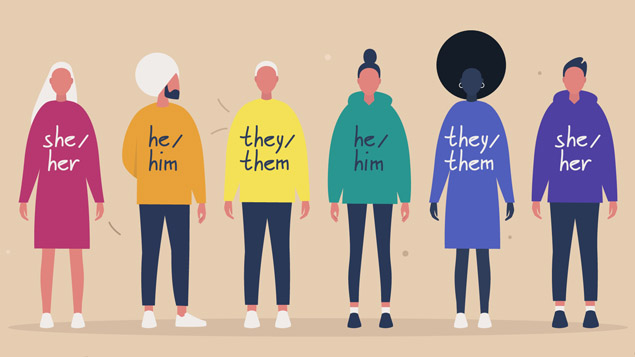
First, I would like to start off with saying that gender and sex are not the same thing. People often confuse the two because they both discuss whether someone is male or female, but the difference is that sex is used in biological context and gender is used in a social and cultural context. Someone’s sex is what they were born as while gender is what a person identifies as. Today, there have been lots of debates and discussions about people expressing that they identify as the opposite gender, and this is seen all over social media. For example, I have a friend that identifies as he/him even though their sex is female, and another identifies as they/them, meaning that they do not identify with just male or female and is a gender-neutral. But society only recognizes and acknowledges the male and female genders, and in stereotypical ways. When I go to the store and I see products “for men” and products “for women”, I can see a big difference. The men products are dark blue, black, red, green, and grey while the women’s products are pink, purple, pastel, white, and light baby blue. There will always be the link between males and blue while women are linked to pink because it’s more “feminine”. There is still only makeup in the girls section and sports supplies in the mens section. This is society’s way of telling us what is feminine and what is masculine. In more recent generations, we have stepped out of the norms a bit. I see men wearing makeup on social media, girls going to the army and playing sports, and many people coming out as transgender. All of this is fighting the stereotypes that have been in place for centuries, like women staying at home and cooking, and men being breadwinners and manly.
However, certain genders are still facing discrimination and seen as inferior. For example, we have yet to have a female as President, and we don’t see many women in power. The politicians that I see are majorly white men, and white men are the ones with the power. Males have always been the superior gender; more hardworking, capable of aggressive or complex work, brings home the money, and a lot stronger emotionally and physically. Not to mention that not only do the white men have male privilege, but they also have white privilege. This is why we see them mostly in politics. It is astonishing to me how these are the people that are deciding what women should be doing with their bodies regarding abortion instead of women making the law about their own rights, and how underpaid women are compared to men. We still see major power struggles today regarding gender. As much as this generation has opened the eyes of society and its older citizens, it has yet to change how set in stone certain norms are, like women being spoken for by men and not being rightfully acknowledged in the work place. Certain stereotypes regarding what is feminine and what is masculine is still in place as well. I believe that these norms have gone on for so long, throughout so many generations now, that it’s going to be extremely hard to get rid of them. It is our old society’s ways and the older generations that keep these gender roles and stereotypes intact. There are only two genders in the eyes of older generations, some in the newer generations as well, and just in the eyes of society in general because of how normalized that idea is. However, there are a few more that have been presented over the years. The genders I know of are female, male, trans, intersex, and non-conforming. I think that speaking more openly about these genders, raising awareness on these communities of identified people, or un-identified people, and being more open to new possibilities and norms.

