By: Shai Hutchinson
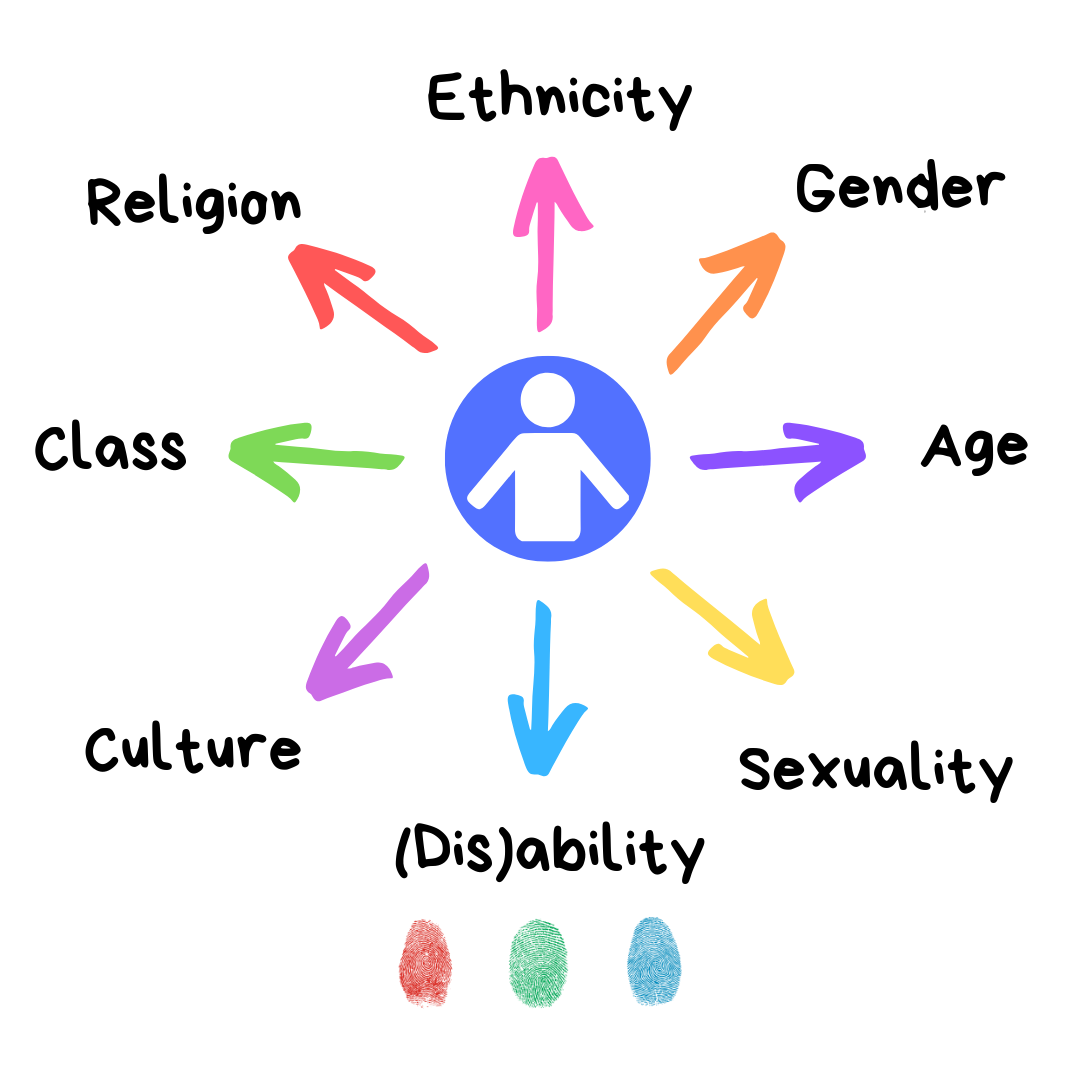
In my opinion, gender, identity and Intersectionality all overlap under the same umbrella of the requirements of social expectation. Identity falls under the broad spectrum as what we all see ourselves, while gender also falls under identity, where we are not necessarily the gender that society expects us to be, but what we identify ourselves to be. Intersectionality in itself takes all these aspects of our identity to qualitatively illustrate how these identities create an overlapping system of discrimination, while also allowing us to see the extent of our differences in the basis of identity. We each hold so many identities that our individual identities can sometimes overlap to form commonalities with the identities of others. In these situations, the majority of the commonalities might sometimes be more favored in society, forming discrimination against the less common groups. The individuals that hold certain identities that are not shared by many other people are sometimes disgracefully isolated from society. This is one of the worst ways in which our society can disappoint us. We should all be allowed to express our identities freely and comfortably without the fear of being judged by other groups who live with the notion that the majority should be the norm of society.
We choose our identities by the way we see ourselves from certain aspects of our characteristics and the decisions we make in our daily lives. For example, gender, political affiliations, religion, race, sexual orientation, disability, nationality, education, language, occupation, ethnicity, social class and marital status are all ways in which we identify ourselves. These categories are often used as forms of discrimination in society. To prevent the less common identities, some of these are often chosen for us. For example, from birth, our genders are chosen by our parents who choose the gender based on our given sex. These genders are assigned based on what is more common and supported in society. For example, in fear of discrimination, many little boys who feel the desire to wear dresses and nail-polish, identifying as the opposite gender, are forbidden to do so by their parents.
Furthermore, in many cultures, marital status are often chosen for young men and women by their parents, before they even become adults, due to the fact that being married is a more favorable identity to obtain in these particular cultures. The trend I see many times in who decides aspects of our identity are not us, but our parents. Our parents assign us preferable identities in order to have us be a better fit in society, but they do it out of love and fear of us being discriminated, due to less common or favorable identities that we might want to express. However, we should all just be who we want to be regardless of what society thinks is more preferable or “normal.” There is no such thing as “normal,” regardless or where our individual identities lead us in the framework of intersectionality.


I loved reading your post. I definitely agree that certain things we identify as or what others are able to identify for us such as gender and race can be used against us. There are many people who do not accept change or are opposed to what is not “normal”. This isn’t a very good mindset since how we identify ourselves can be very different from what people can see on the outside. Strangers do not get to know you personally or receive the same information about you as your acquaintances, friends, and family. By putting people in fewer categories it makes it easier for others to digest. For instance, a person may identify as non-binary but strangers may not assume that and would either categorize them as a girl or boy. In order for a change, people have to understand that we have been conditioned to believe there are x amount of categories but not everyone fits into them.