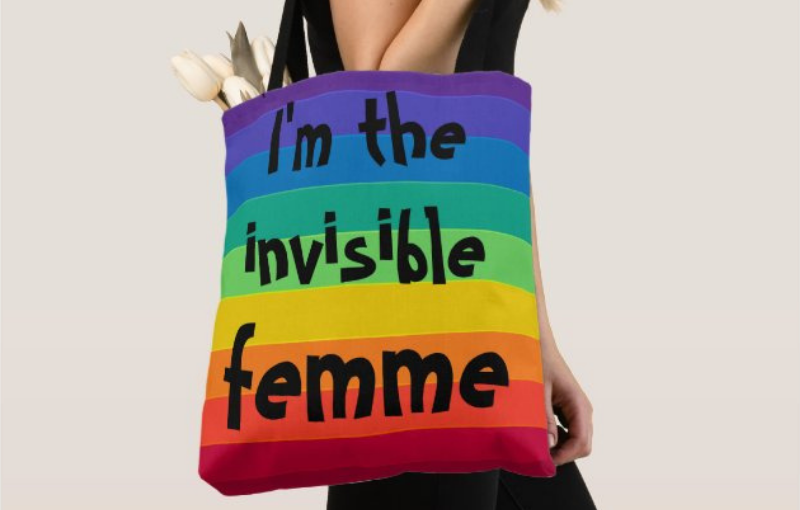
Oftentimes, queer people are mostly vulnerable to attacks or assumptions made by the rest of society. Many people associate certain expressions and physical appearances with these sexual identities. It’s assumed that queer women are likely to take on a “masculine expression” where they wear t-shirts, jeans, and stir very far from makeup. Such stereotypes don’t take into account the women that identify as queer who look feminine. Femme invisibility is a crucial problem in our community as they are overlooked upon due to the stereotypes surrounding these individuals.
Rhea Ashley Hoskin identified four types of types of femmephobia, one of which is structural/covert femmephobia (2013). Such form of phobia creates negative stigma surrounding those females that appear girly in nature, which leads to these individuals feeling inferior for their physical appearances. In a study conducted by Karen L. Blaira and Rhea Ashley Hoskin, one participant mentioned that “the more femme I act, the less serious I am taken” (2015). Thus, there is some form of correlation between structural femmephobia and femme invisibility which makes these females feel as if they are in subordinate positions. In turn, these feelings of exclusion can lead to these individuals feeling isolated, even though they wish to be seen part of their community. However, the stigmatization that is created surrounding queer women, where they must look “butch” keeps these people in the darkness, away from being recognized for who they choose to identify themselves as.
Therefore, it is important for society as a whole to understand the internalized struggle and conflict that these women face while fighting to fit in the LGBTQ community. Alongside that, it is crucial for us all to be educated on why femme invisibility is an issue that further implies stereotypes surrounding femmephobia.

