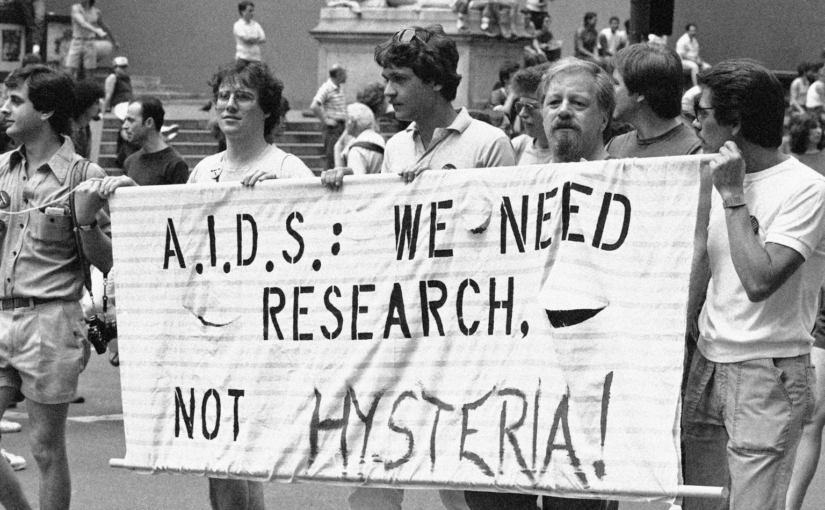
Throughout my research, I was able to better understand the AIDS crisis during the 1980s. I was able to find out how the epidemic was able to politically, socially, and economically impacted the LGBT community then and even now. Panic struck the United States when cases of patients who died due to an unknown autoimmune disease made headlines. The first case was reported in 1981 when five previously healthy gay men in Los Angeles were infected with rare lung disease, Pneumocystis carinii. All five men suffered moths of high fevers followed by numerous infections and other diseases. Doctors tried numerous treatments to which all failed. Two of the five men died due to the autoimmune disease. At the end of 1981, there were over 270 cases of severe immune deficiency reported among gay men and 121 reported deaths. Doctors didn’t understand the severity and that caused panic nationwide over the unknown disease. Before the 1960s homosexuality was criminalized and frowned upon. In New York sexual relations between the same gender were illegal. Gays and lesbians were harassed, imprisoned, and blackmailed by the police. At the time homosexuality was thought to be a mental illness and was curable through psychotherapy. During the AIDS epidemic, things only got worse. From the 1960s to 1970s, activists sparked the lesbian and gay liberation movement and were able to lessen the stigma that was associated with homosexuality. Due to these activists and cultural changes, the New York State sodomy statute was declared unconstitutional, and mental health professionals were able to officially cease treating same-sex love as a psychological disorder. However, when the AIDS epidemic started its rise, the nation was in panic and that prompted homophobia. This made it really hard for gay people living with HIV to receive proper treatment and healthcare. It affected many people financially post-crisis. Any progress that was made during the 1970s was gone when HIV came around. Gay men were stigmatized and the hatred towards the LGBT community skyrocketed more than pre-epidemic. Gays were blamed for the spread of AIDS many demonizing it as “the gay plague.” There were also many religious institutions that contributed and enabled the stigma around individuals who identified as gay. Hate crimes against gay men in particular also increased between 1983-1986. In the first 9 months in 1986, there were 351 reported cases of homicide and verbal attacks all aimed towards homosexuals. Medical professions refused to treat homosexuals and those living with HIV often resulting in discrimination through physical or verbal abuse. Even those who showed AIDS-like symptoms were refused healthcare. AIDS victims who passed away were rejected by funeral homes leaving families of victims too embarrassed and in fear to mention the cause of death. Many people who were victim to HIV were fired from their jobs and suffered financially and statistically showed lower in come resulting to having to sell many of their belongings. The AIDS crisis was a huge negative impact on the LGBT community however, many reforms as well as organizations in response to struggles and education. Since then there have been many achievements in the LGBT community.