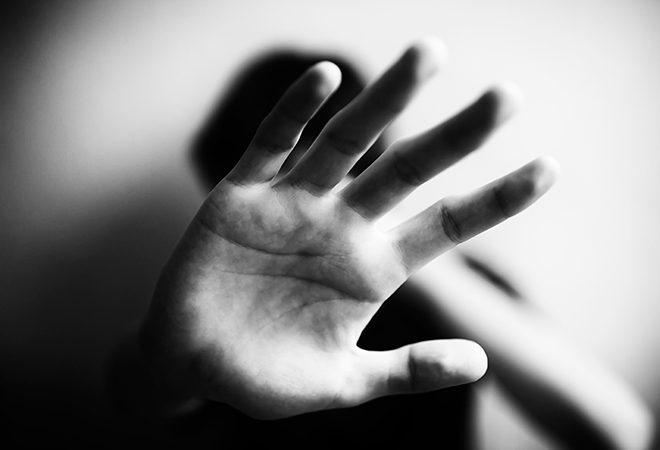
Domestic violence is an issue facing women across the world from South Asia to the United States. It is never okay if it happens to any person, and creates traumatic experiences that are painful, create stress and fundamentally alter one’s outlook and outcomes in life. Through this research study and creative presentation, I’ve gained an intersectional approach to how state violence and social norms via patriarchy and power dynamics create power imbalances within the South Asian community. These imbalances and dynamics have led to terrible outcomes where misogyny and hate have led to physical and domestic violence against South Asian women. Women have experienced serious levels of oppression, femicide and many other consequences that have led to feelings of gaslighting across society as a whole for South Asian Women.
To date, women in Bangladesh experience high rates of domestic abuse, with over 72% of women reporting experiencing some form of abuse in Bangladesh. Southeast Asian countries as a region also experienced at least 1 out of 3 women experiencing some form of physical or intimate partner abuse in the region. And while these numbers have been reported to decrease over the past few years, there is still much work to be done and alarming concerns about the physical and mental safety of many women in these situations.
To give an alarming statistic on the gravity of this issue, 235 women were murdered by their husband or family in the first nine months of 2020. According to human rights group Odhikaar, there have been over 3000 related murders and deaths due to dowry disputes. Studies from the early 2000’s suggest that over 60% of women have experienced spousal violence. Due to lack of accountability, very few cases are ever prosecuted in court, further stigmatizing women’s changes to speak up and expect any type of justice. Domestic Violence plays a big role in the intersections of how power balances take place within a household. Domestic violence is further linked with toxic masculinity, upholding patriarchy that was further institutionalized under colonial rule. Domestic violence stems from the different stems of impunity that have been informed over the course of the past three centuries. These varying intersectionalities create tremendous social, psychological and physical approaches to how women’s role in society and within a household.
Domestic Violence in Bangladesh also can change. There are many women’s organizations that are leading groundbreaking techniques and therapies and more women are economically empowered than ever before in this nation’s short history. Through the use of different intersectional approaches, this paper will address the methods in which women have created new techniques to design, develop and combat domestic violence through public health, labor and other intersectional approaches.
Bangladeshi women have found a plurality of ways to cope with this type of domestic and partner violence including through emotion and problem driven approaches including the use of somatic and other therapeutic approaches. This paper will examine the different ways public health responses can alter the situation women in Bangladesh face and create a public engagement campaign to shape behaviors and encourage women to develop new ways to combat violence against women, especially domestic and intimate partner violence.
WORK CITED:
Rahman, Khandaker Farzana (2019). Focus on Domestic Violence in Bangladesh: A Study from Criminological Perspectives. Journal of International Women’s Studies, 20(3), 98-115. Available at: https://vc.bridgew.edu/jiws/vol20/iss3/10
“I sleep in my Own Deathbed”. (2020, November 12). Retrieved April 27, 2021, from https://www.hrw.org/report/2020/10/29/i-sleep-my-own-deathbed/violence-against-women-and-girls-bangladesh-barriers
Johnston, H. B., & Naved, R. T. (2008). Spousal violence in Bangladesh: a call for a public-health response. Journal of health, population, and nutrition, 26(3), 366–377.van der Putten, M. and Nur-E-Jannat, A. (2020), “Coping with domestic violence: women’s voices in Bangladesh”, Journal of Health Research, Vol. ahead-of-print No. ahead-of-print. https://doi.org/10.1108/JHR-02-2020-0026

